The Distress line of inks has grown into a collection with different formulas and formats. Each of them is special for a specific technique. However, you may not be clear about what and when to use each one. Let's know everything about all the Distress inks in this post.

Distress Ink and Distress Oxide are among the most widely used inks in scrapbooking.
Differences between Distress Ink and Distress Oxide Inks
Distress Ink inks are dye-based inks. They are fast-drying and have an opaque finish.
Oxide inks are actually a hybrid, they're dye and pigment. For this reason, they are more opaque and have slower drying.
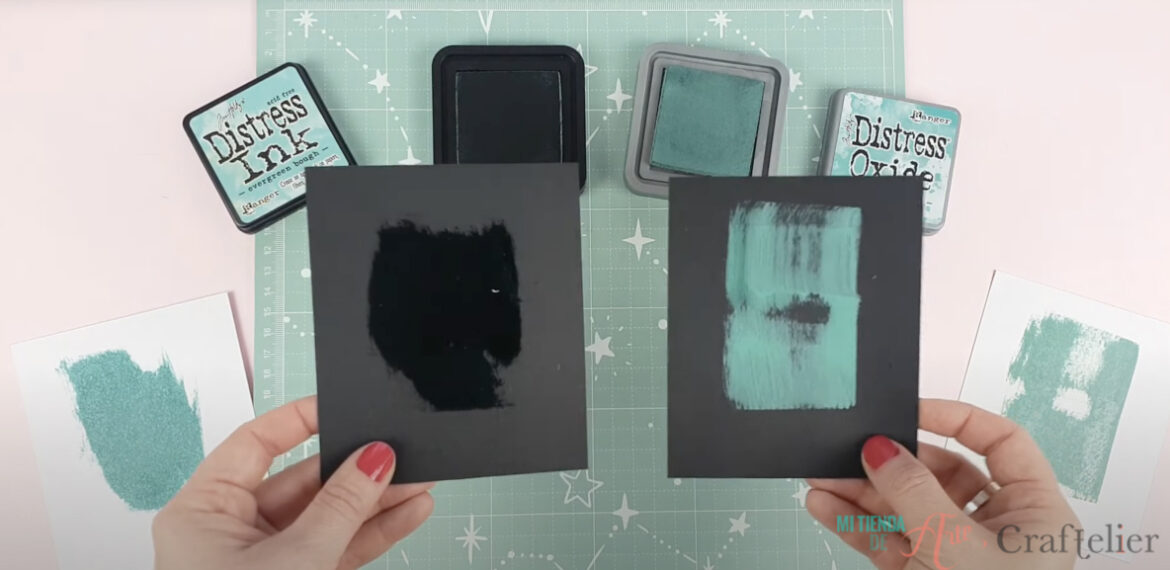
When applying these inks on white or light-colored paper, you can already see the first differences: the Distress Oxide inks reflect a brighter and more opaque colour, while the Distress Ink colour is more subtle. The finish is also different, Oxide inks have a creamier finish, similar to chalk.
These differences are more pronounced when applied to dark backgrounds. The Oxide colours completely cover the background, whereas the Distress Ink colours do not, revealing the surface colour.
One of their most notable characteristics is that they are water-reactive. This means you can modify and vary their colour with colour.
The gradient is one of the most extensive uses of these inks. Due to their composition, you can easily make gradients or blends with these inks, especially with Distress Oxide inks.
Spray Distress Inks
Both Distress Ink and Distress Oxide are available in spray format.
Distress Spray Stain
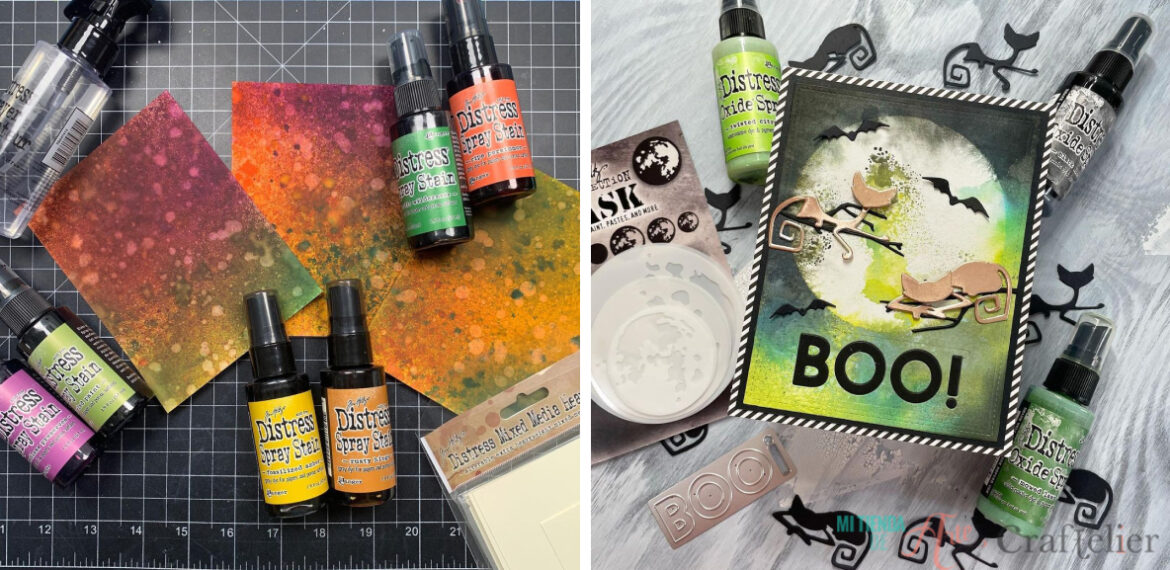
These inks are totally opaque, and their colours are pretty vivid. They belong to the ink family, meaning their composition is dye-based, so they are translucent. If you mix different colours, you will see how they blend perfectly with each other, while you can also see the background of the paper underneath. And, of course, you can add water to continue experimenting with these inks.
Distress Oxide Spray
As it is an Oxide ink, dye and pigment are its components. The two liquid compounds tend to separate, so it is important to shake them well before applying them to your project. Or, if you prefer, leave the bottles lying down for a while before using them.
With Oxide Spray, you can get a layered effect, as they spread more easily than the Distress Stain.
Distress Mica Spray
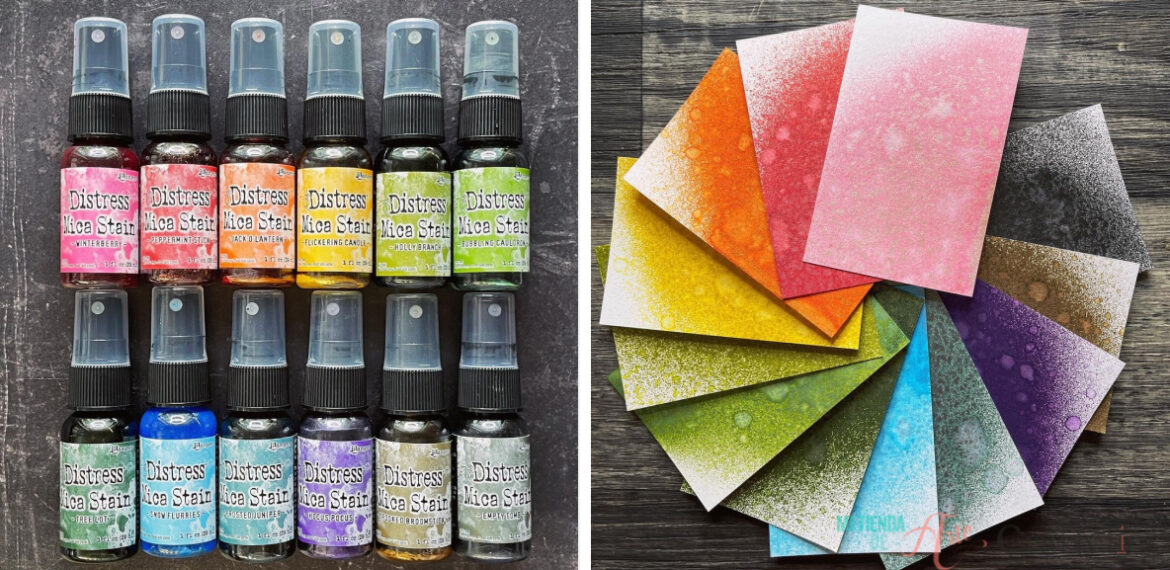
These inks are a bit more special because they add gloss without adding any colour. You can use it over any ink without altering its colour. This will give you a lot of versatility for your projects.
Distress Paint
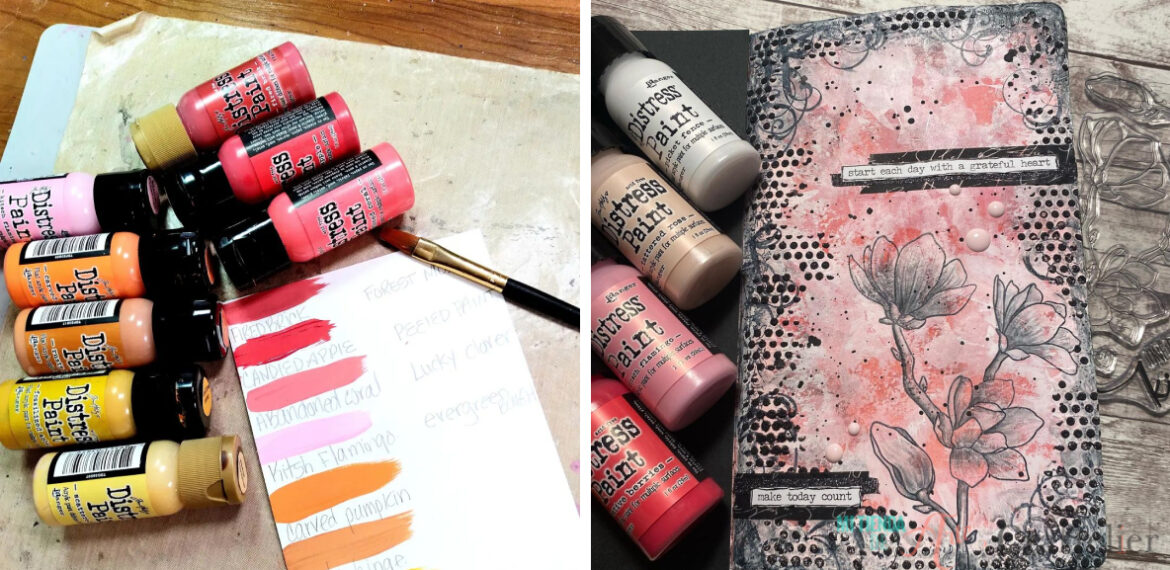
Perhaps the furthest away product from the main characteristics of Distress. It is a water-based acrylic paint that is permanent. The most interesting aspect about it is that, while it's still wet, you can modify it using water. However, as it is permanent, once dry, it will not react to water.
This is something you can take advantage of, as all other Distress paints reactivate with water even if they are already dry. This pigment can be used on different surfaces (metal, paper, cardboard, wood, fabric, or glass). It has a million uses.
Its texture is very fluid and viscous, so it is advisable to shake it before use. In this case, it has nothing to do with mixing its compounds, it's just to get the right texture.
Of course, you can experiment and mix different Distress Paints and you can see that colours do not mix completely, the colours are mixed on top of each other, creating a marbled effect.
Other Distress Ink formats:
Distress Embossing Glaze
These are embossing powders. They are translucent with a glossy finish and match the other colours in the Distress range. You can apply it to any project to intensify the colour and add shine. Of course, you can use it on any surface, even wood or metal.
Distress Crayons
These inks came in a different format, a stick one, perfect for colouring and blending. If you are going to blend them, we recommend you to do it quickly, it'll be much easier! This format is very easy to apply and has a dense and creamy texture, which leaves bright colours.
Of course, they also react to water, so you can apply a little bit to make them easier to blend or to diminish the colour in certain parts... You know that the options offered by Distress are endless.

Distress Inks and Distress Oxide Reinks
Reinks are refills for refilling our inks, available for both Distress Ink and Distress Oxide inks.
But you can give them more uses, for example, use them as if they were watercolours. You can pour a drop of your Reink favourites colours and with a brush and a little water, you can play with these pigments.
Of course, working with Distress Reinks or Oxide Reinks it's different. Distress Ink Reink will give you a finish quite similar to the one you would get using traditional watercolours. And if we paint with Distress Oxide you will get a much more opaque finish.
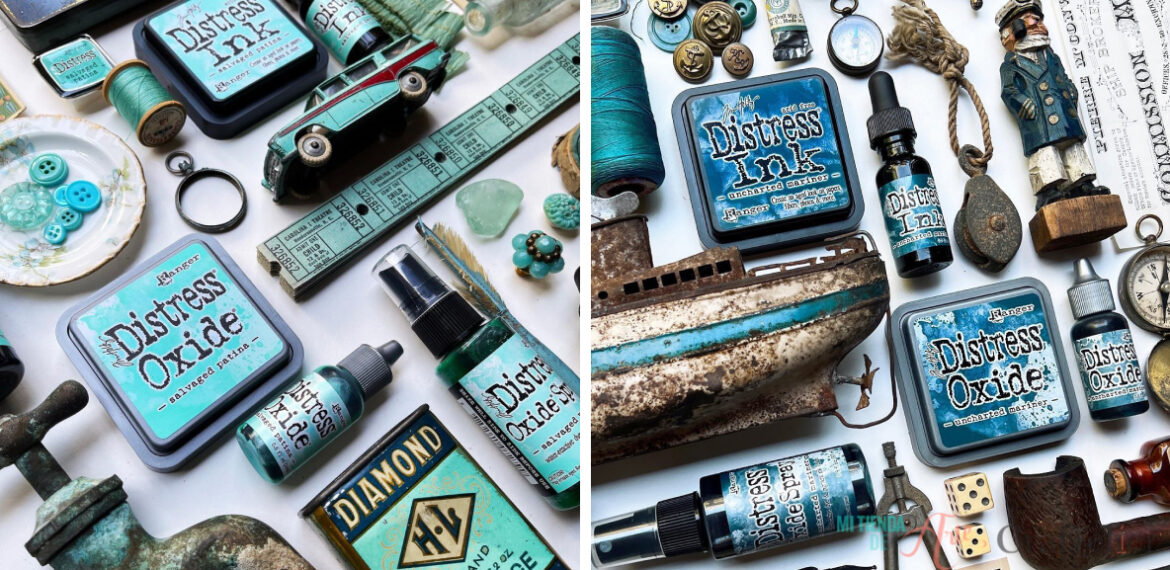
Without a doubt, Distress inks allow us to obtain different finishes and results, you just have to experiment a bit with them. Tell us, do you use Distress inks, do you have a favourite format, and we'll read you in the comments!