You may have heard of it, or seen hundreds of projects made with this material without even knowing that they were made with polymer clay. That's why we'd like to explain a little about this material, which has so many uses and is so versatile.
As we were saying, polymer clay has hundreds of uses, you can use it to shape figures, to make textured details, to make decorative objects, such as vases or bowls, and to create your own pieces of jewellery, hair accessories or even photo frames. (Commonly, this type of clay is also called "FIMO", as it is the name of one of the brands that market this clay.)

Although it is not a toxic material, it should not be used to create elements that are in direct contact with food. Since it is a porous material, we cannot clean it in depth, and therefore we cannot eliminate all the possible bacteria that we could find if we were to use it for these purposes.
What is polymer clay?
Polymer clay is a dense but malleable paste, very similar to plasticine. It is composed of PVC, plasticizing oil, which is the element that makes it manageable and flexible; and of course, colour pigments. Due to its composition, we can manipulate it as many times as we want without it becoming hard, as it happens with plaster or common clay.
The main difference with common clay is that if we use polymeric clay it is not necessary to add pigment, as we can find it in different shades and even different finishes such as metallic, transparent or phosphorescent effect, in pastel tones.... a great variety to choose from!
Now that you have your designs ready, you need to bake it, and for this you only need a domestic oven heated to a constant temperature between 100 and 130 °C. In addition, to make our creations last for years, it is recommended that they are not near abrasive heat or direct sunlight.
What do I need to work with polymer clay?
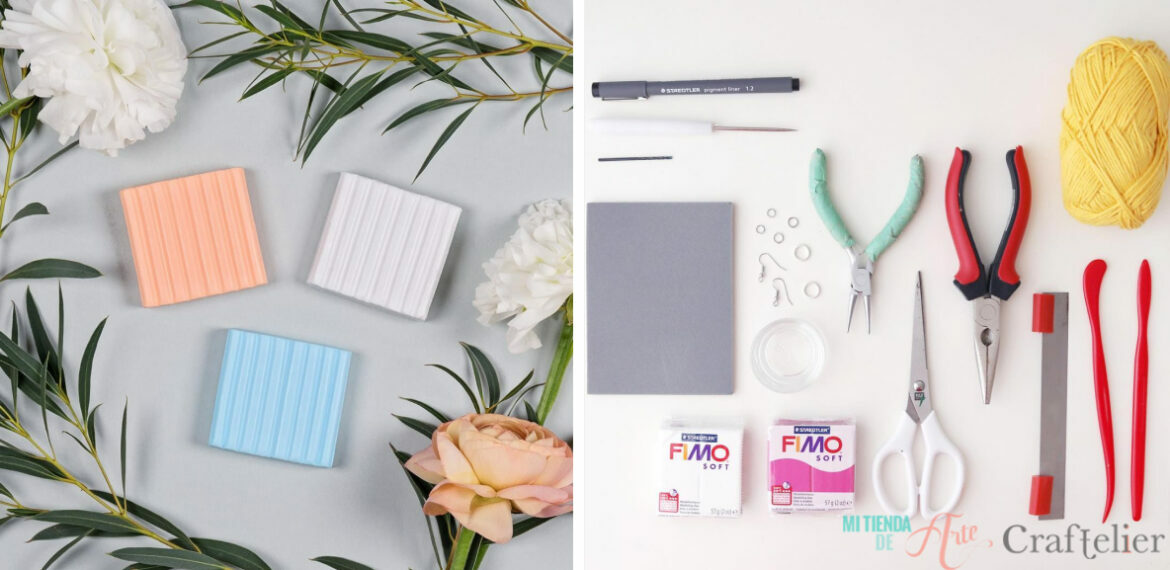
One of the reasons why polymer clay has such an accepted and widespread use is due to its ease of use and the fact that we can work with it with domestic tools. Some of the tools that can be useful are the following:
-Rolling machine: this type of machine is usually used to work with fresh pasta, but we can use it with this type of material. The rollers are adjustable, allowing different thicknesses of sheets to be obtained.
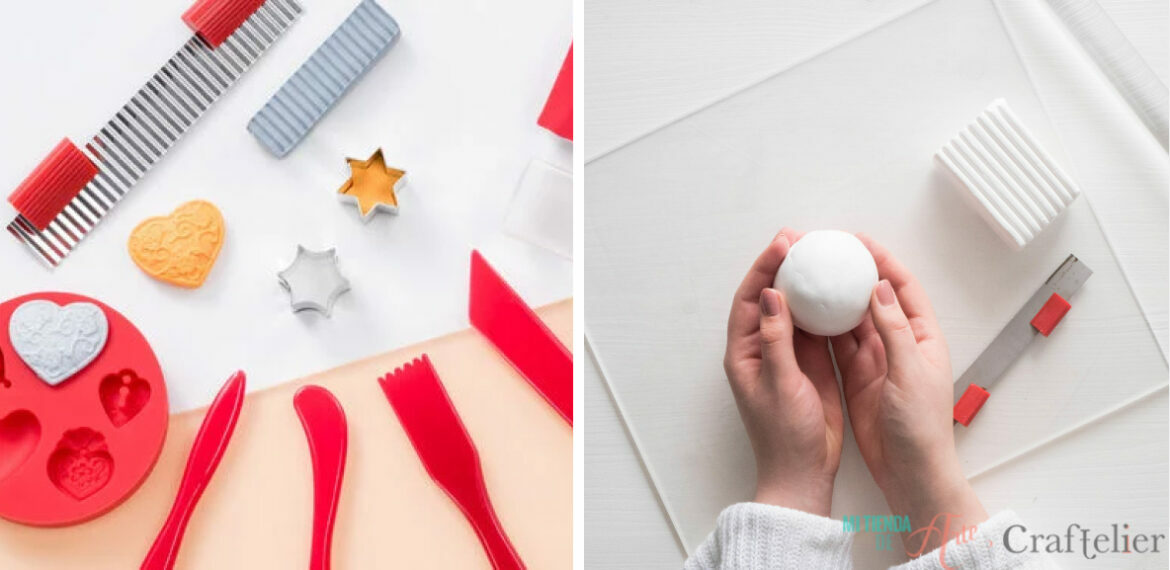
-Knife: an essential tool to cut, slice, push or smooth. There are blades on the market with a smooth edge or with different shapes to create different effects: chopped, wavy, etc. When starting to work with clay, you can use a cutter.
-Moulds: these are very similar to the moulds used for biscuits. They are usually metal pieces with different shapes that we place on a clay plate and by applying a little pressure, a shape is made.
-Oven: our domestic oven will be enough to work with the clay. We only need our clay to bake between 100 and 130ºC.
How to use polymer clay?
1- Knead the clay for a few minutes so that with the heat of your hands, the paste warms up, and you can obtain a slightly softer texture. This will make it much easier to give it the desired shape.
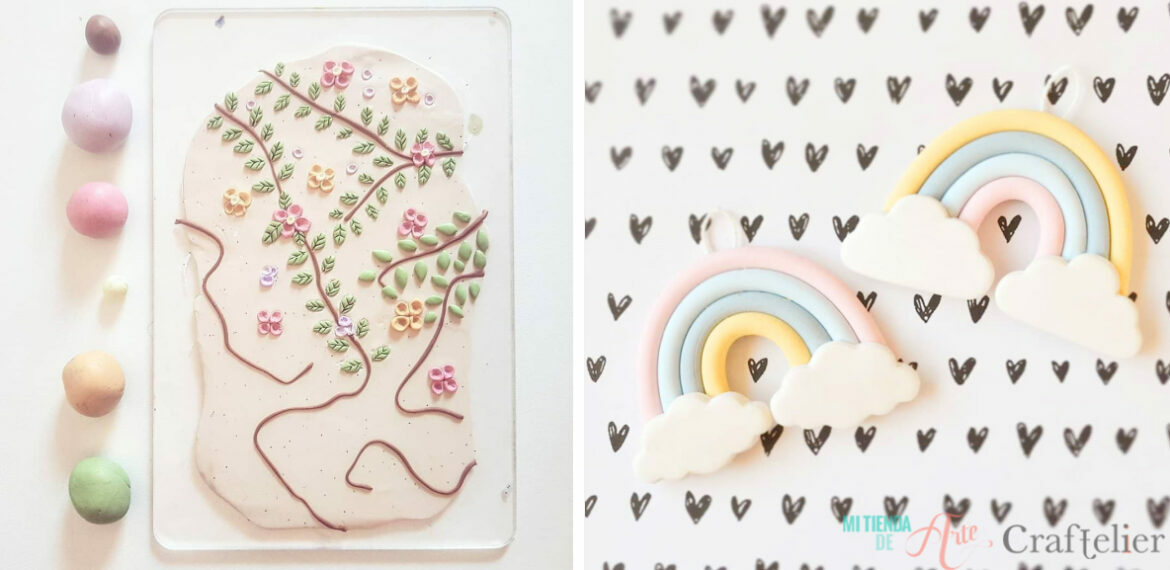
2- Shape your dough to your desired design. Play with colours, make mixtures, gradients... anything you can think of!
3- Before putting your project in the oven, make sure that there are no unwanted marks such as a speck or our own fingerprints. Therefore, dip a cotton swab or a lint-free cloth in alcohol and gently wipe the surface to remove these marks. Another option is to soak your fingers in alcohol and gently wipe the surface of your project.
4- Heat the oven to 100 or 130ºC. Bear in mind that this will depend on the oven and the manufacturer's recommendations. It is not recommended that the oven temperature be too high, otherwise our clay will burn. The clay should be in the oven for between 15 and 30 minutes, depending on the clay you're using and the thickness of your creation (again, we recommend to always read the manufacturer's specifications). You will know that your clay is ready by sticking a small pin in an area that is visible, if the pin does not sink, you can take your figure out of the oven.
5- Once dry, you can cut it, sand it or paint it as you like. It is possible that your piece might not have a glossy finish. To solve this, there are specific varnishes with different finishes: glossy, satin or matte. We can apply the varnish with a brush or with the immersion technique.
What do you think about polymer clay? It's amazing how many projects we can do with it and how easy it is to use, isn't it? We love experimenting with different techniques and playing with mixing colours. Tell us, what kind of projects do you do with this type of clay?