Watercolours have been an almost indispensable part of our scrapbooking basics for a long time. It's a very versatile material that we use to paint stamps, write titles, or even make our own backgrounds. That's exactly what we're here to talk about today.
The best thing about working with watercolour is that each project is unique, you never know exactly how it's going to look and it's almost impossible to come up with two identical designs. And that's where the addiction of watercolour lies, using them in our projects is a real adventure, you don't know where it'll take you.
In addition, we can use a lot of techniques and materials, with which, sometimes, only with varying small details of the application, we can obtain totally different results.
 It's not the first time we talk about watercolour on our blog and that is because we really love it. If you're new to watercolours, you can start by visiting our Watercolour for Dummies post, where we give you some tips that could be useful for you.
Before we start, we want to remind you that you should always use watercolour paper to make your designs. Watercolour needs a lot of water, and therefore we need a paper that absorbs a lot of water so that it does not bend or deteriorate due to excess water.
Now, let's go with some original ideas to get more out of your watercolors.

 To this technique we can also use a stencil, we can create a nice background or even make our main design from it.



 What did you think of the ideas we collected for watercolour backgrounds? If you want to know more techniques, you can visit another of our posts, where we show you more ideas for watercolour backgrounds.
Now it's your turn, tell us your tricks for making watercolour backgrounds, we want to learn more about it!
In the meantime, until the next post, see you soon! :)
It's not the first time we talk about watercolour on our blog and that is because we really love it. If you're new to watercolours, you can start by visiting our Watercolour for Dummies post, where we give you some tips that could be useful for you.
Before we start, we want to remind you that you should always use watercolour paper to make your designs. Watercolour needs a lot of water, and therefore we need a paper that absorbs a lot of water so that it does not bend or deteriorate due to excess water.
Now, let's go with some original ideas to get more out of your watercolors.
Use plastic
Although it may seem a rare occurrence, many artists use this technique, and it's not surprising, because it's easy and leaves amazing results. We can use anything from a thin acetate to a plastic bag (like the ones we use at home for freezing). Depending on the plastic stiffness it will influence the final result, if we use a thin plastic, the folds will be marked and if it's more rigid, as it doesn't bend, the result will be more uniform. Impregnate your plastic film with watercolour, either by depositing small drops, with a brush... and then, turn it over on the paper. Press the entire surface of the plastic and carefully lift it up. The design is done! Before the watercolour completely dries, clean the plastic so you can reuse it as many times as you like.
Create your own pattern
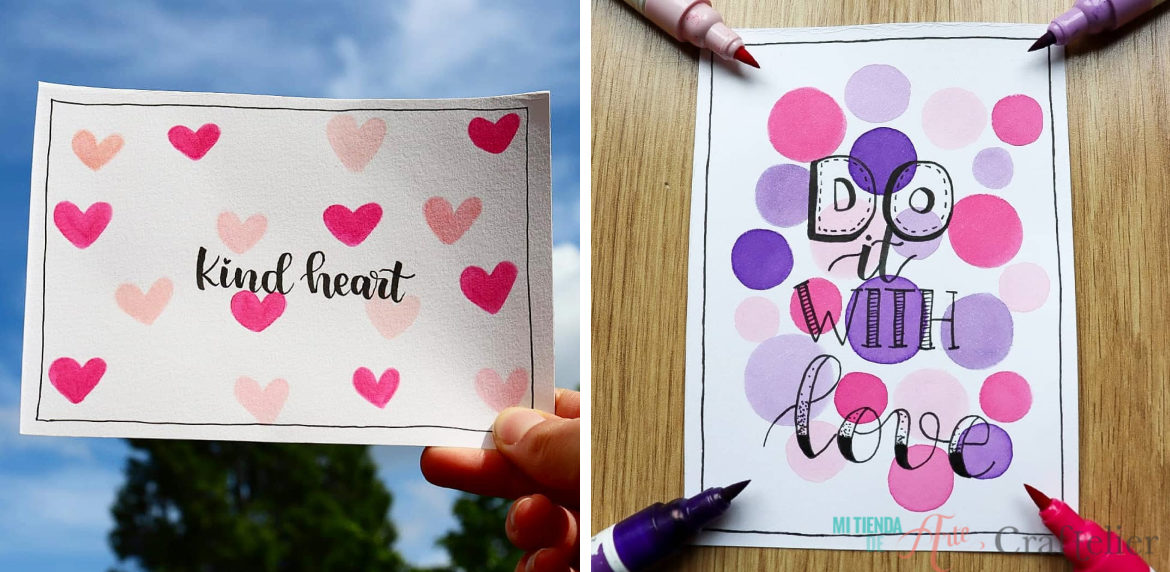
This is perfect for having a totally personalized design, and you shouldn't be afraid of doing it, because you don't need to be a great painter to get beautiful results. Make some pencil marks of your designs, but be careful, the pencil marks must be as fine and smooth as possible, as watercolour are translucid and the pencil mark will be visible through the watercolour.
To this technique we can also use a stencil, we can create a nice background or even make our main design from it.
Use some Washi Tape
You can create beautiful patterns with some washi tape. Justa place the washi in your paper in some nice patterns like strips, squares, crosses... Whaterver you like. Paint with your watercolours and let it dry. Remove carefully the washi tape and enjoy your designs :)
Mettalic details
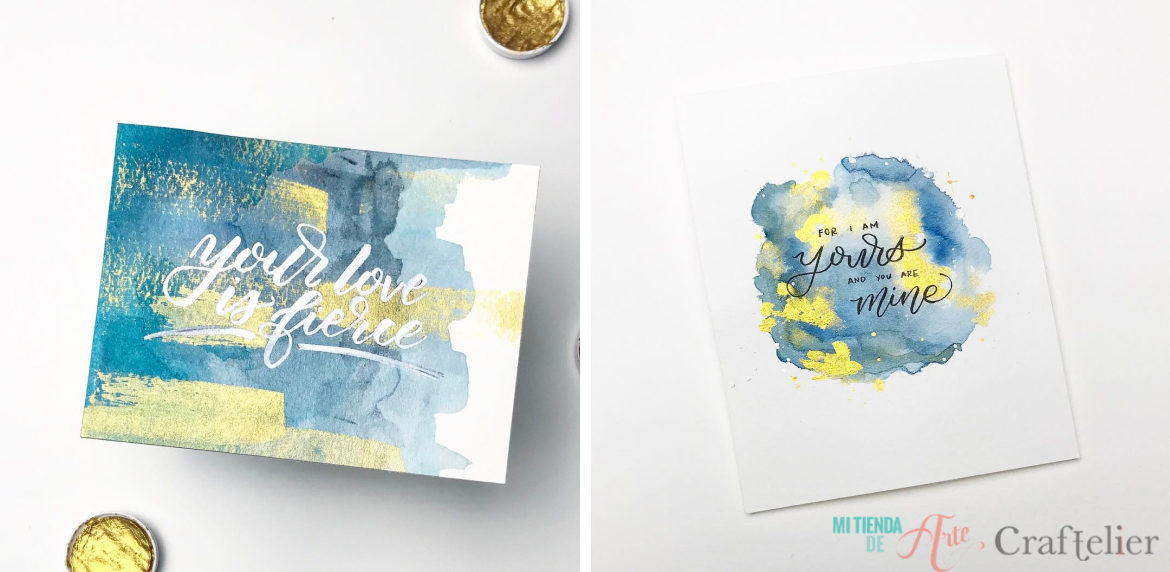
Metallic details are so beautiful in our projects that we are reluctant to let go of this trend. If you're afraid to use the gold or silver tones to make backgrounds because of how flashy they might be, this is your technique. With the help of a brush, deposit some of these beautiful shades in your designs to enhance your designs. You can also repeat the previous technique and make a splash in metallic tones.
Grab a sponge
A very easy technique. Just add water to your sponge and then watercolour. Paint in your paper by taping with your sponge over it, you'll see how cool is the effect the sponge makes over the paper! The best part of it, it's that we'll use it for more than just backgrounds, it's the perfect technique to paint clouds or the sea foam. Time to start experimenting with different colours!Add a few drops of bleach
In a glass of water, all you have to do is add a few drops of bleach (about four drops in a full glass, although we recommend that to make some proofs until you find the perfect composition for you). Add this water to our watercolours and deposit little drops of colour to your liking. You'll see that when the colour is deposited on the paper, some branched out colour droplets are formed, leaving an original finish for our backgrounds.
Colour gradient and layers
Start with very soft colours to the darker ones. Little by little and by zones, add layers and increase the intensity of the colours. To add an extra touch, leave unpainted zones every time you paint a new layer. The finish is super cool. Another version of this technique, is the layering watercolours. Something as easy as making some patterns, then let them dry and painting over them with other colours would end up in beautiful designs.
What did you think of the ideas we collected for watercolour backgrounds? If you want to know more techniques, you can visit another of our posts, where we show you more ideas for watercolour backgrounds.
Now it's your turn, tell us your tricks for making watercolour backgrounds, we want to learn more about it!
In the meantime, until the next post, see you soon! :)