
Today we try to solve that question that brings us all upside down, which adhesive is best for scrapbooking?
One of the basic elements that cannot be missing when practising scrap is a good glue or adhesive, but which one we should choose? I'm sure you've seen yourself in this situation more than once, crawling through blogs and websites, or turning to your colleagues in the field for advice on which glue is best for your project. That's why today we wanted to make a post dedicated to the most common adhesives in the scrapbook, in order to explain the typologies, their characteristics and try to guide you a little.
So, if you ever have doubts about which is the best adhesive for your project, you can always reread this post.
Liquid Adhesives:
These adhesives always come in a bottle and because of their liquid formula, they allow us to have a smooth and uniform application. Among these, the most outstanding are Tombow and Glossy. The Tombow Mono Aqua is a liquid and transparent glue with two dispensers for more precise applications or for large surfaces. As it is colourless and acid-free it is very useful for gluing photographs, because it doesn't spoil them or interfere with the original colour. We can also find the Tombow Multi Liquid which has an advantage. It has both permanent and removable drying (while wet we can move it and once dry, the adhesion is permanent). In both cases, with very little quantity, you get very good results of adhesion.

Glossy is another of the liquid adhesives par excellence, but with a unique feature, when it's completely dry we obtain a three-dimensional effect. The best thing is its double function: to glue and to give volume and relief to certain elements of your scrap projects. It has a small dispenser to work with precision on certain details. In fact, you can apply small drops directly from the bottle to have ornaments that look like transparent enamel dots when they dry. It's important to remember that this glue must be stored without any glue bubbles in the nozzle so that it doesn't dry out and you can use it easily the next time (in the case of some bubbles in the nozzle, you can use a pin to undo them).
CAUTION: Pay special attention to the amount of adhesive we apply, especially if you're working with thin papers. If you apply too much product the paper may get a “wet appearance” and crumple slightly.
ADVANTAGES: Fast adhesion, small nozzle very useful for details.
Double-sided tape:
A neater option is double-sided tapes. They are ideal for sticking paper, cardboard, and photographs as they do not wrinkle the paper or contain acids that could end up spoiling the photographs. The use is very simple, you extend the tape and stick a piece of it on the surface you want to adhere to, then, you remove the protection tape (usually it comes in a different colour to distinguish it) and you stick it wherever you want.
The double-sided tapes are so versatile and there is an extra-strong version to have extra protection when sticking our projects and not worrying about unstuck pieces. We've made our own version of this extra strong double-sided tape, and we've made for you three different widths: 5 mm, 9 mm, and 18 mm.
ADVANTAGES: Fast adhesion, small nozzle very useful for details.
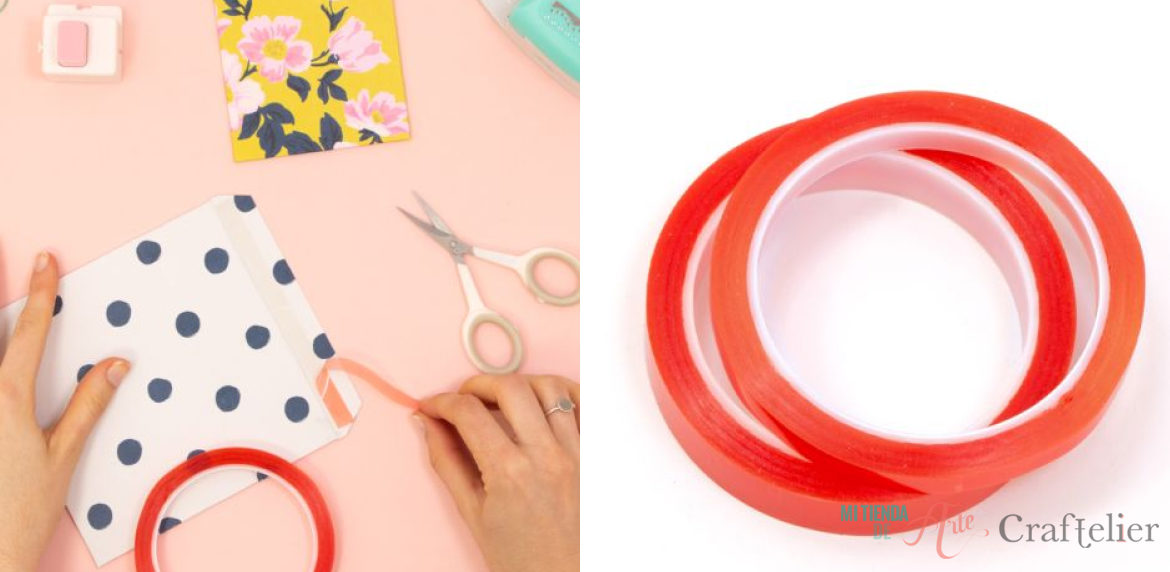
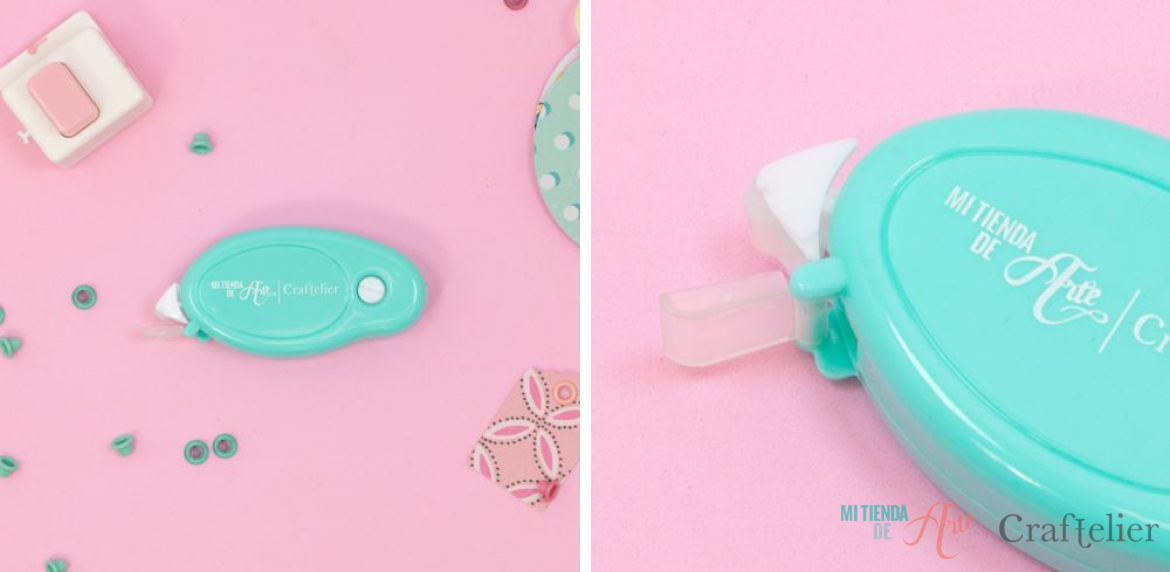
There are more and more models of double-sided tapes, and among them, we highlight tapes with dispensers, such as our double-sided adhesive dispenser. In most cases they have the appearance of a Tippex, so the adhesive is applied directly to the surface in just a few seconds.
You also have another variant of the double-sided tape: the double-sided 3D tape that will serve to highlight your projects.
ADVANTAGES: Very clean adhesive, does not wrinkle the paper, great for photographs or large papers.
Mod Podge:
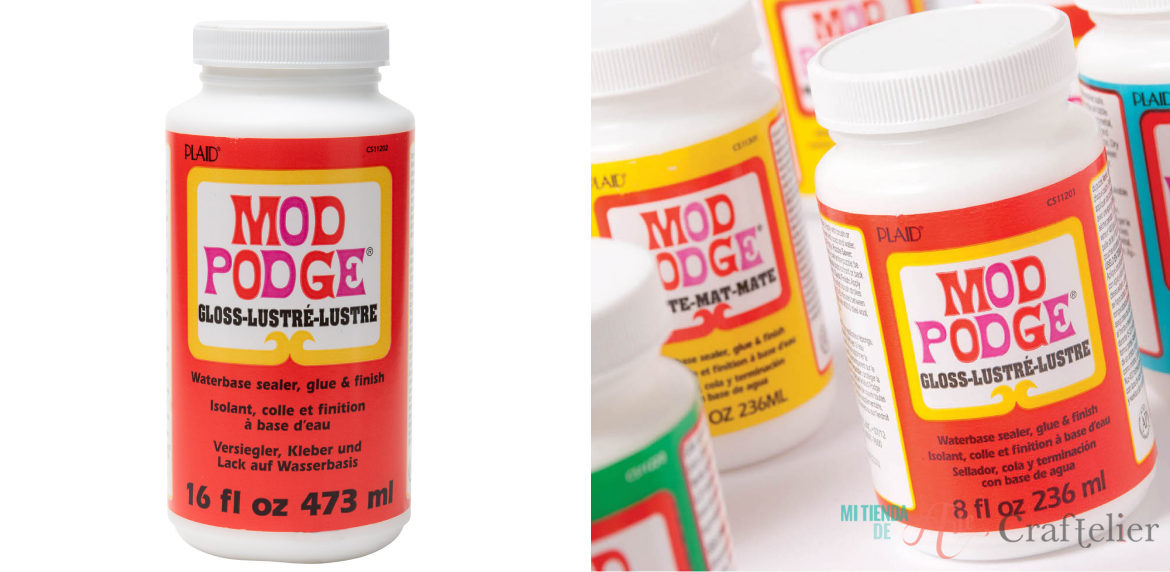
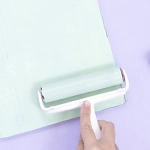
The Mod Podge is a protective adhesive that looks like white glue. Its uses are many: decoupage, sticking of fabrics, protection of puzzles... In our case, in scrap, it's very useful to seal our works and protect them. We recommend its use for notebook covers or agendas we're going to use a lot, especially if we are going to put them in a bag, and we do not want them to wear out. You can choose between matte or glossy finish, in either case, when it dries it's transparent.
Tacky Glue:
It's a very versatile multi-purpose glue as that can be used to glue paper, cut-outs, decorations, jewellery, silk, fabric (not recommended for use on fabrics that will be washed), wood, metal, glass, ceramics, EVA rubber, and many plastics. The result is a super-strong glue, ideal for sticking all kinds of decorations and ornaments. To apply it, you can do it directly with the nozzle, cutting it to the size you need; with a brush, mixing it with water or, even, giving it some colour by adding some drops of acrylic paint. We have already said it: versatile is the best word that defines the Tacky Glue.
ADVANTAGES: Very resistant, recommended for binding.

BLOK:
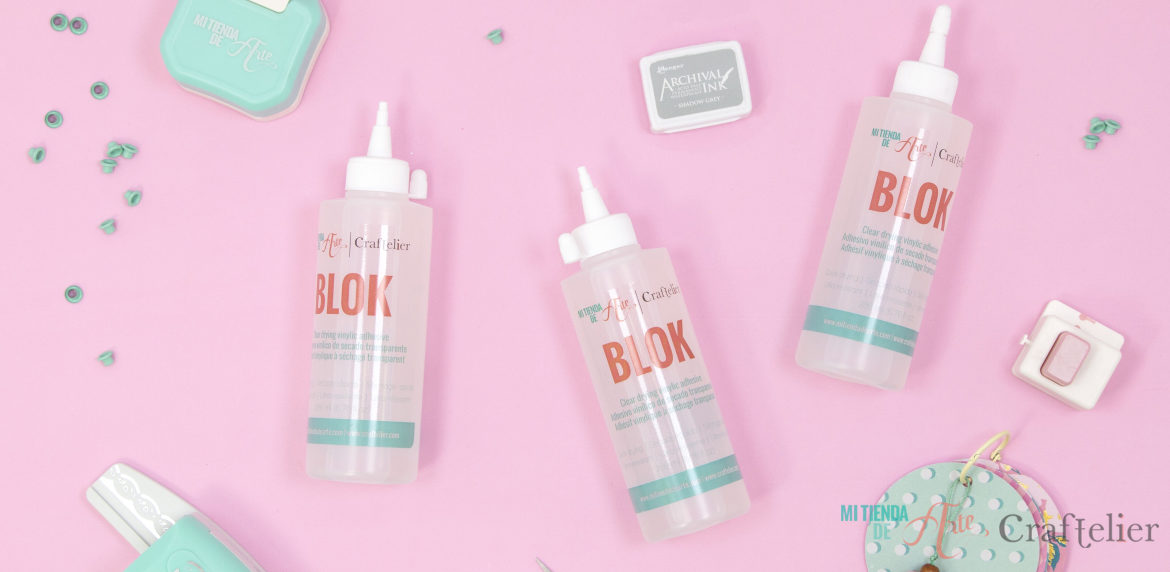
It's one of the best well-known glues in the world of scrap for its great versatility. It's extra strong and multi-material. Our brand, Craftelier's Basics, has its own version of BLOK so it's available at the best price. BLOK glue is a high-quality adhesive capable of sticking leather, wood, glass, ceramics, metal, fabric, and, of course, paper and cardboard. It's a perfect adhesive for bookbinding and cardboard projects, where it's very important to achieve fast drying.
ADVANTAGES: Thanks to its fast transparent drying, it does not leave marks once it has dried.
Glue dots:
Glue dots are small circles with adhesive on both sides. It's ideal for sticking small items with a tiny surface, such as buttons, fabrics, jewellery, ribbons, sequins. They adhere permanently to all types of surfaces such as paper, metal, wood, textiles, plastics, etc. The perfect solution for not making a mess of small details!
ADVANTAGES: Very comfortable and quick to use.
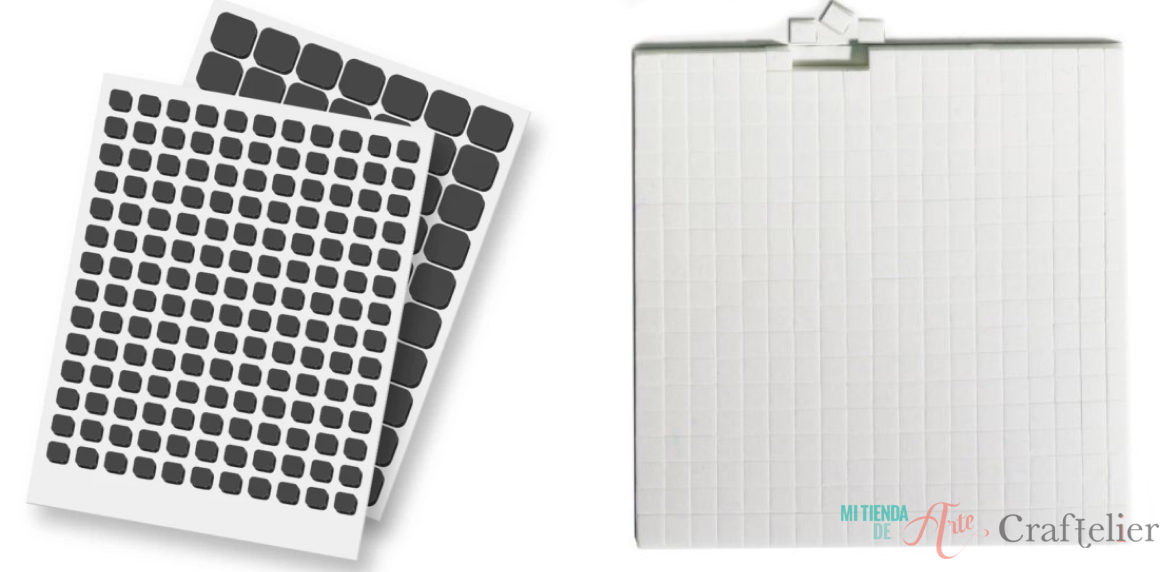
Foam Squares:
They are adhesives that allow us to create a relief and dimensional effect in our works. If you're one of those who like to create a 3D effect on your projects, the foam squares will help you a lot. Their format in small adhesive squares on both sides -available in several measures- is suitable for all kinds of papers and photographs.
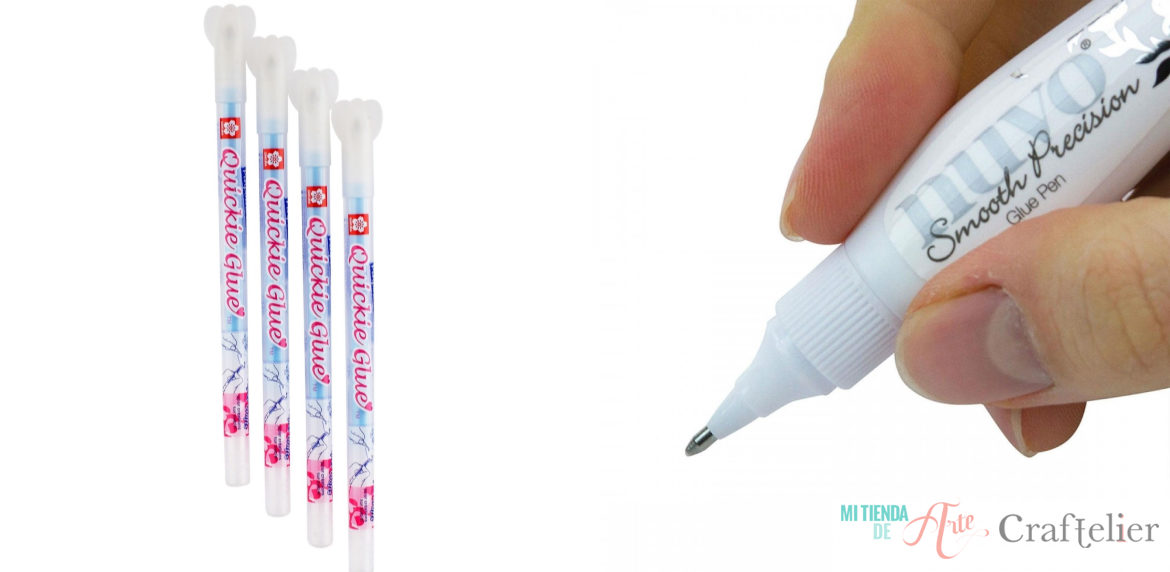
Glue pen:
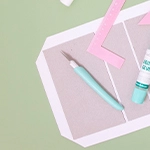
If you're looking for a glue that allows you to be very precise, the solution is a glue in the form of a pen or marker. You'll be able to glue very fine pieces like watermarks or details. Depending on the model or brand, its use may vary, but its purpose is always the same: to facilitate the work of gluing pieces that require a lot of precision.
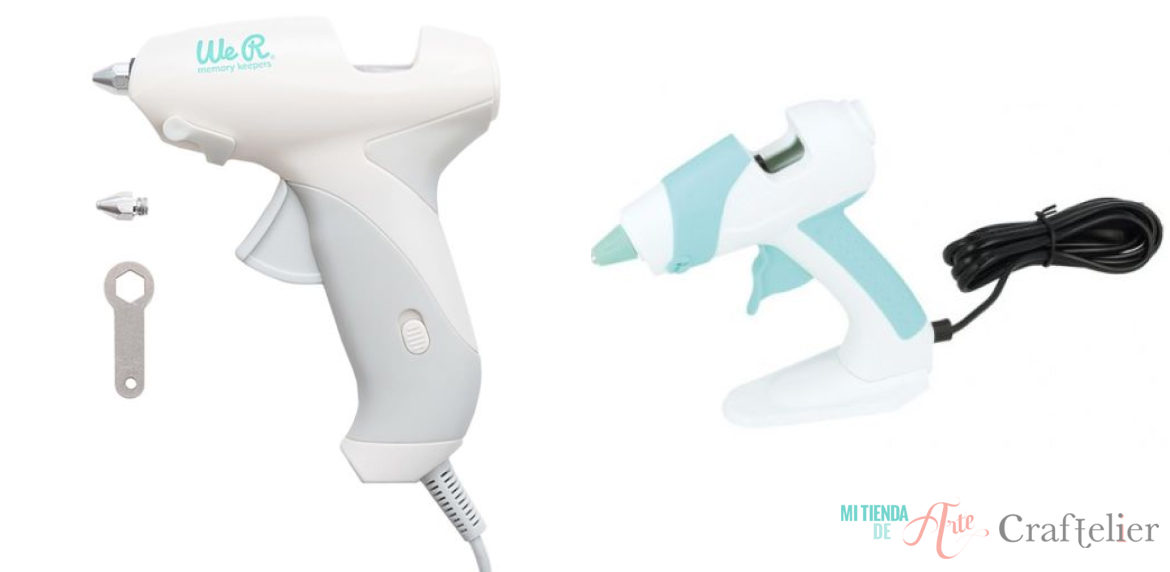
Silicone gun:
The best option for bonding surfaces with heavier structures. If you're one of those who put a lot of decorative elements on top of each other in your scrap projects, you may need to use silicone to adhere all the pieces together in a most effective way. It's very easy to use, fast and durable. Silicone guns may be wired or wireless silicone and they're a great option not only for scrap but for all types of crafts, but for any DIY project.
CAUTION: Caution, it burns!
Glue stick:
It's one of the most common glues, especially when we do crafts with children. The great advantage of the glue stick is its ease of use and its resistance. Ideal for paper, cardboard, and photographs. We could define it as “the great basic of scrap”.

And now, can you tell us which are your favourite stickers? What is your experience with them? Which of them do you have to have always at hand?


2 Comments