The water tank paintbrush has so many possibilities that it is worth a whole post dedicated to it. Let's talk about what they are and the different uses you can give to them.
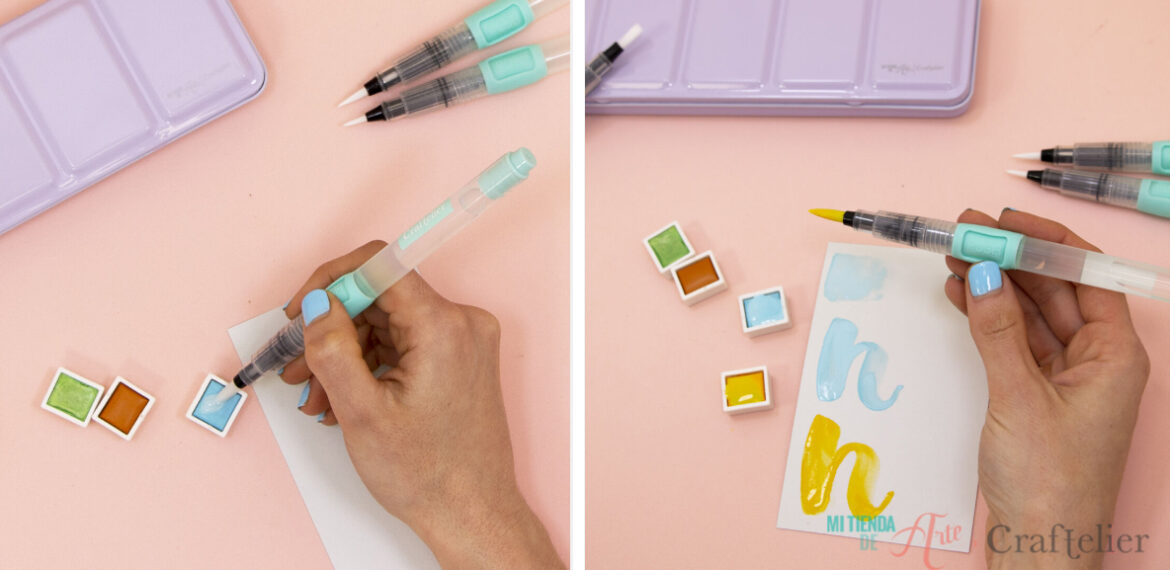
If you like painting with watercolours, calligraphy or Mixed Media, water tank paintbrushes are a must-have in your set of essential tools. This Japanese invention has many advantages, but it also makes it much easier to paint with watercolours without making it too complicated.
So much so, that they say -and we can confirm it- that once you start painting with this type of brush, there is no turning back. If you try them, let us know what you think!
These characteristic brushes can be found in different thicknesses, each one for a different purpose:
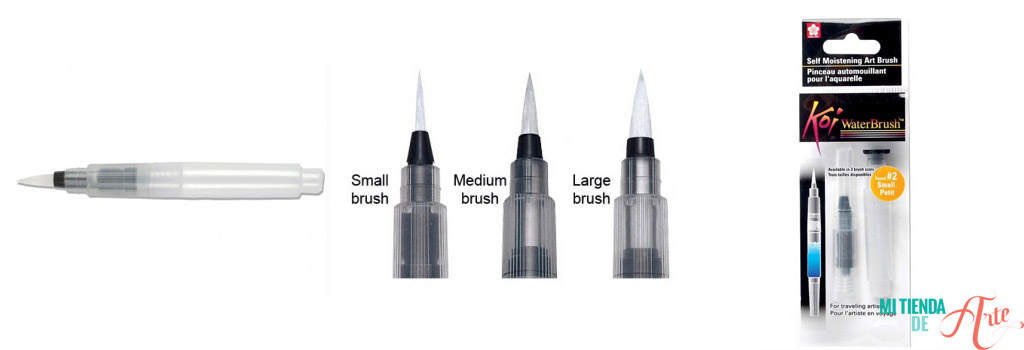
- The small one is perfect to make details, for example, colouring stamps or small surfaces of our drawings.
- The medium is the all-rounder, very useful for all kinds of projects and to start working with water brushes because it doesn't require as much precision as with the small one, nor as much control as with the large one.
- The large one is perfect for creating backgrounds and giving colour to large surfaces.
In any case, regardless of the type you choose, the brush is structured in two parts that can be easily separated: the flexible brush tip and the tank, where the water is stored, controlled by a non-return valve. A safe and comfortable system. And speaking of comfort, it's time to talk about its advantages.
Advantages of water-based markers or brushes:
- Very easy to use. Some even say that they are much better to handle than a normal brush, because they have a very comfortable grip, and you can perfectly control the line and the effects you want to achieve.
- Convenient. You don't need to keep water bottles on the table, and you can work more comfortably.
- Portable. If you are one of those who like to go out to draw, go travelling with your material, or you usually go to scrapbooking meetings and workshops, you will find it very useful to carry your water brush with you so that, in any situation, you can start colouring.
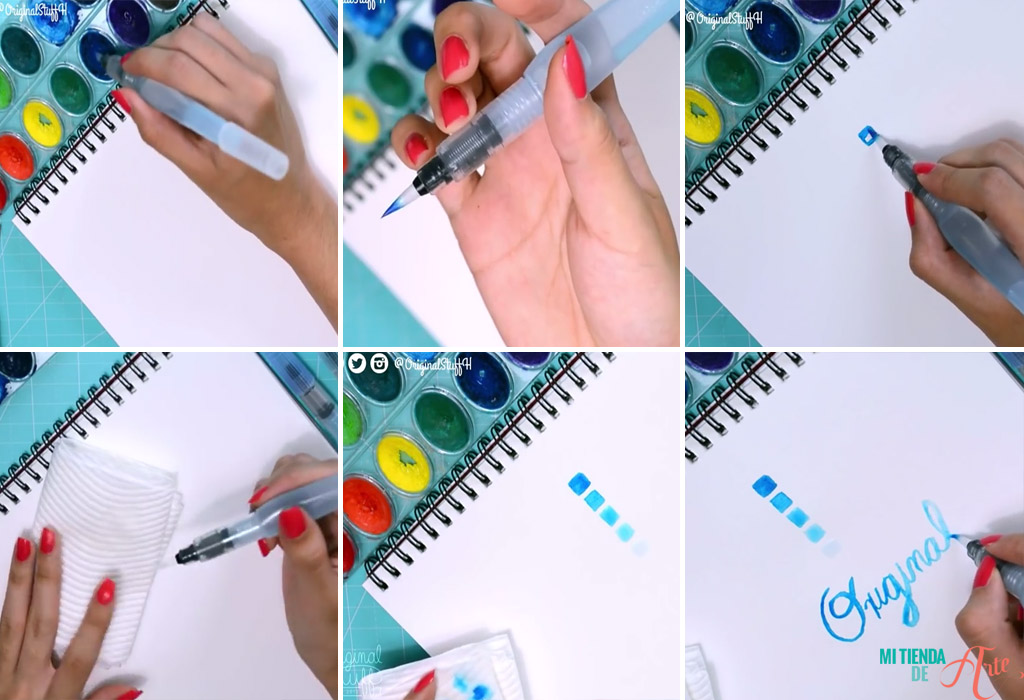
Now let's go to the most educational part of the post, this is how the brushes with a water tank work:
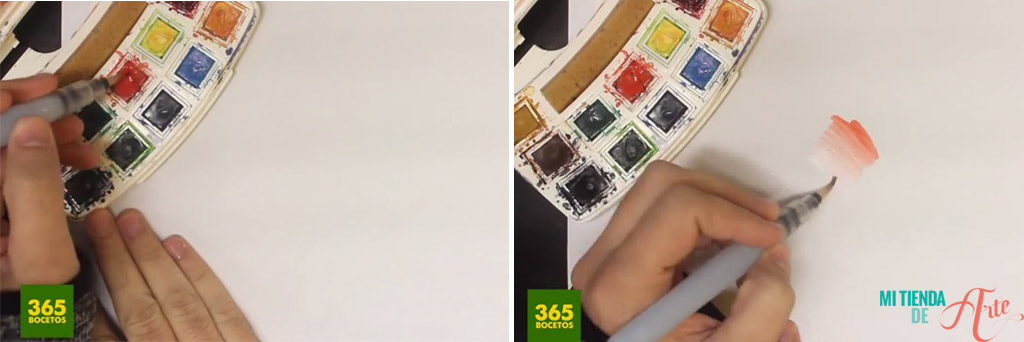
- Open the brush and dip the tank, squeezing it a little, into a glass or bucket of water. Stop squeezing lightly so that the water is sucked into the reservoir. Repeat the action until the reservoir is completely filled.
- Pass the tip of the brush over the watercolour tablet, letting a few drops fall to moisten it (just squeeze the handle lightly).
- Once we have loaded the brush with paint, we can work on our project. If we want to play with gradients and other effects, we can squeeze the tank a little to make the paint more watery. This way, we have total control over the amount of water we apply in each brushstroke.
To clean the brush, we will use a paper towel. Place the tip on the paper and gently squeeze the reservoir until the water has cleaned the tip of the brush.
As you use the brush, you will probably notice that the tip is a little coloured. This is normal, the synthetic bristles can stain slightly, but don't worry because it won't fade or mix with the later watercolours you will be working with.
If you are not going to use the brush for a while, it is better to empty the entire water tank to prevent mould from growing inside it. And, in the same way, for complete drying, leave them in a horizontal or vertical position, without the cap on.
In addition to filling it with water, we can fill it directly with some liquid watercolour, but we will not do it with an acrylic-based ink or watercolour or one that produces lumps when drying because the brush could become clogged. But, just in case this happens, open the brush and clean it with water. If we can avoid this type of watercolours or inks, it will be much better because in the long run it can affect the durability of our brush.
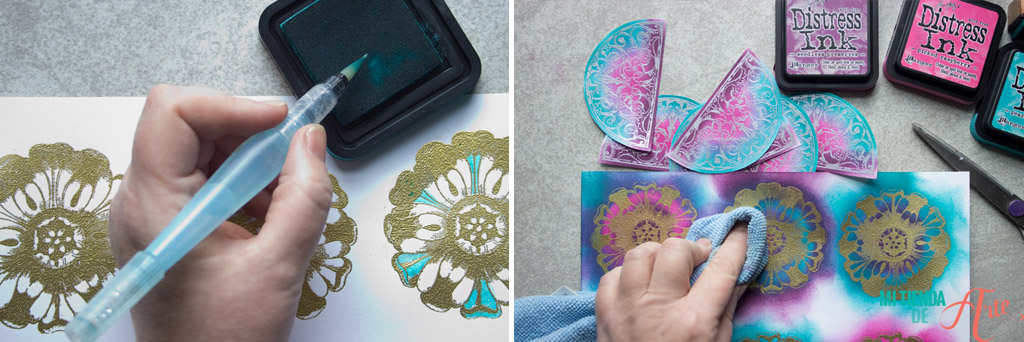
Another use for our water tank paintbrush is to use it with all our water-based inks, such as the famous Distress inks by Tim Holtz. These inks dissolve easily in water and the result is fantastic if we use them as if they were watercolours. In fact, the Tim Holtz brand even has its own brush with a water tank. You can use them to make backgrounds, calligraphy or simply to paint your stamps.
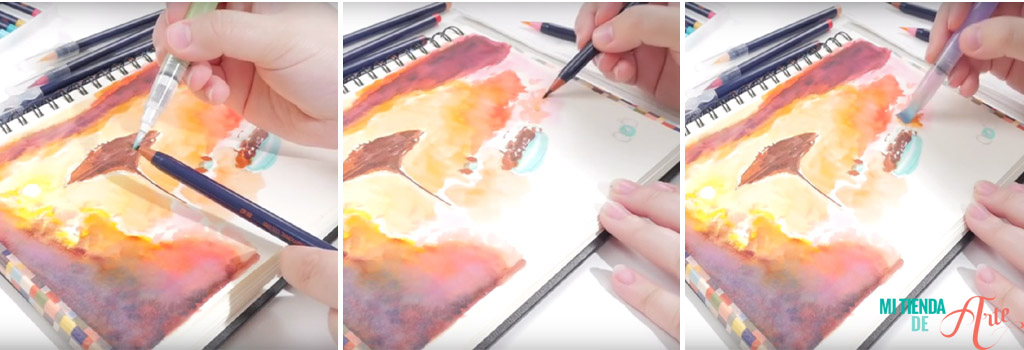
Another option is to use our water tank brush with watercolour pencils instead of watercolours. In this case, it is perfect for working on small surfaces, as we will moisten the tip of the pencil with the tip of the brush and so, we can paint the small details of our project.
It can also be done the other way round, we will first colour on the paper with the pencil and then we will pass the brush to moisten it and give these paints the watercolour effect.
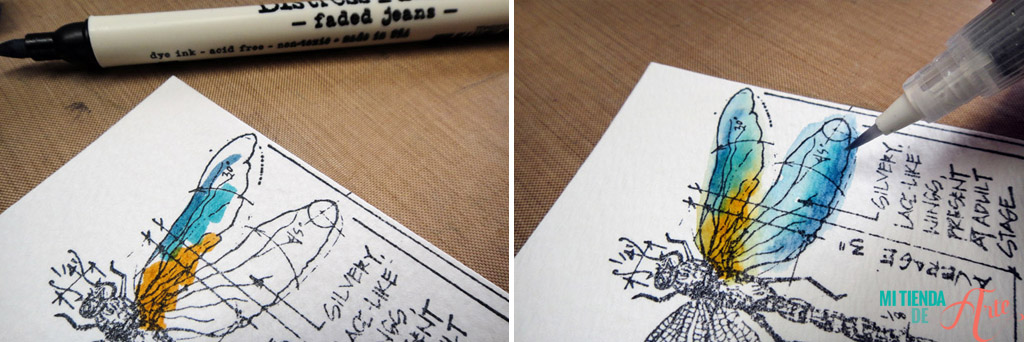
If you want to use watercolour markers, such as this Waterbrush set, the process is the same as with paints. We paint the surface with the marker and then blur the colour with our brush, controlling the water to create more or less blurring.
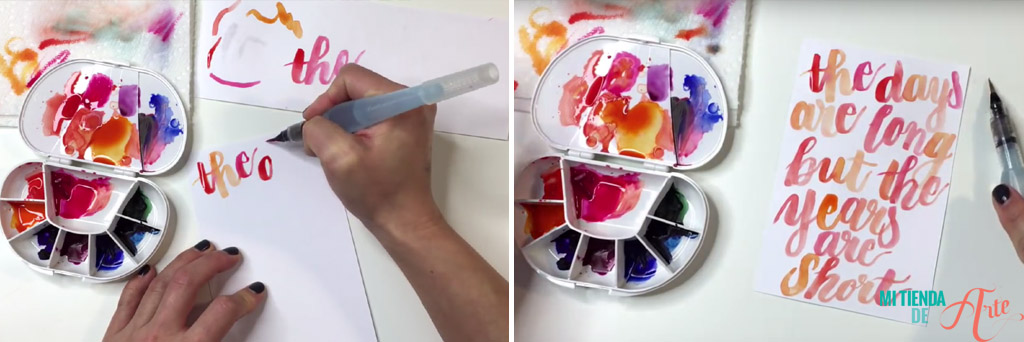
And, of course, we couldn't finish this post without mentioning how useful the water tank brushes are for practising calligraphy, either with black ink or with colour. Depending on how we hold the handle of the brush and the pressure we exert, the stroke will change, which will be very effective for playing with the typography of the letters. But we will tell you more about that in our tutorial on how to write with watercolour.
So, as you can see, a single brush with a water reservoir gives you a lot of play, it can't be missing in your work set!