Is there a more important element in our scrapbooking creations than paper? Probably not, and that's why there are so many models on the market. Of course, the only difference between them is not just the design. Let's talk about paper.
Depending on the project you're going to make and the different techniques you're going to apply, it'll be better to use one paper or another, so it's crucial for us to learn about them and know their differences. We've made a little guide to help you clarify all the information.
 Different types of paper
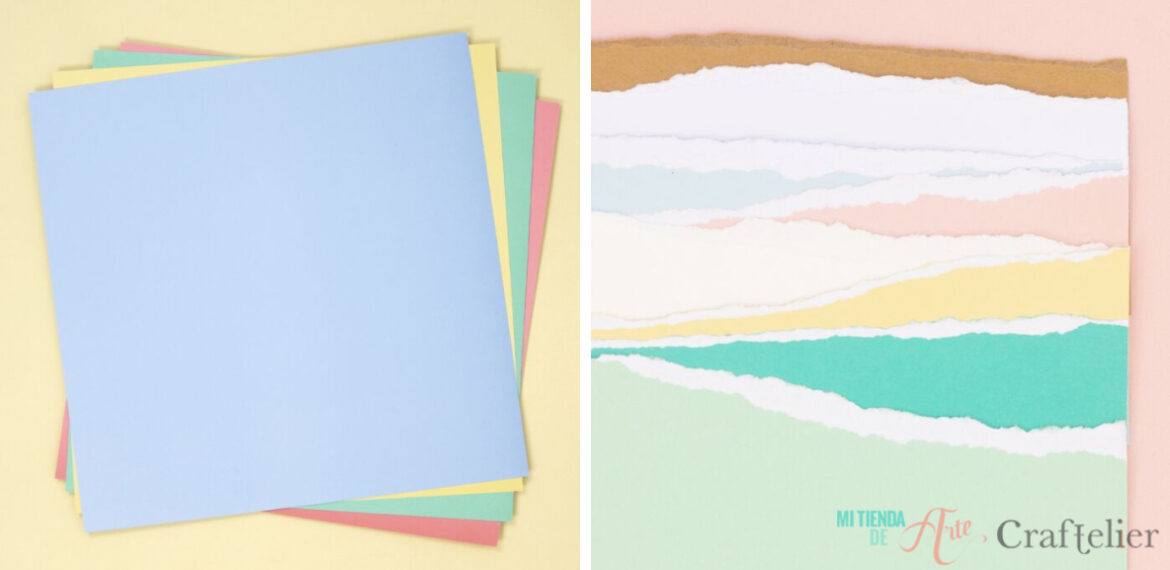
-Scrapbooking paper: it's the most common paper, a mix of paper and cardboard in different proportions. You can find them in different sizes, thicknesses, designs, and finishes, such as matt, satin, glitter, or metallic.
-Vellum: a very thin and translucent paper. This kind of paper will make all your projects more elegant, that's why you'll see it a lot in more special projects like wedding invitations. When though vellum paper is considered a type of paper, technically, it isn't. The origin of vellum is quite different from paper's, as it's made with cotton. That's the reason why is so soft.
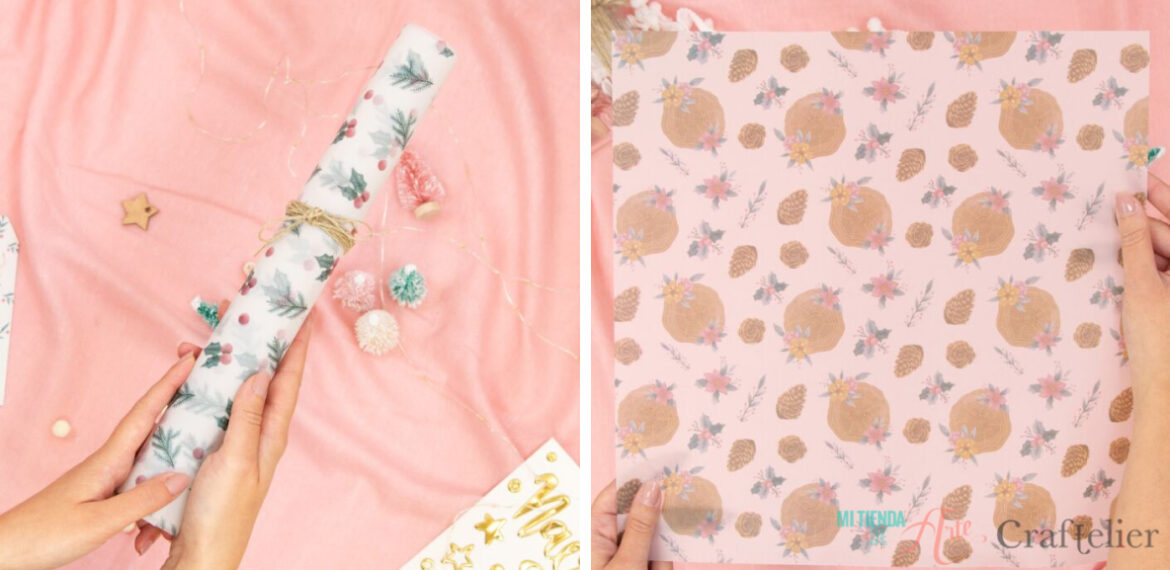
-Crêpe paper: it's a very thin paper and rough-textured paper. You can find many designs and patterns to choose from. It's often used to decorate at many parties and especially to make paper flowers. A little tip to make paper flowers with crêpe paper: use a slightly heavier weight paper to obtain a better result and to make it easy to work with.
-Silk paper: this is a very thin paper that is available in many colours. As it is very thin, it can tear easily. It is very common to see it in gift decorations or to make flowers or pompoms.
-Decoupage paper: decoupage is a technique that consists of decorating furniture with paper cut-outs, and although we can use almost any type of paper for this technique, there is a special type of paper, which is quite thin and special for this.
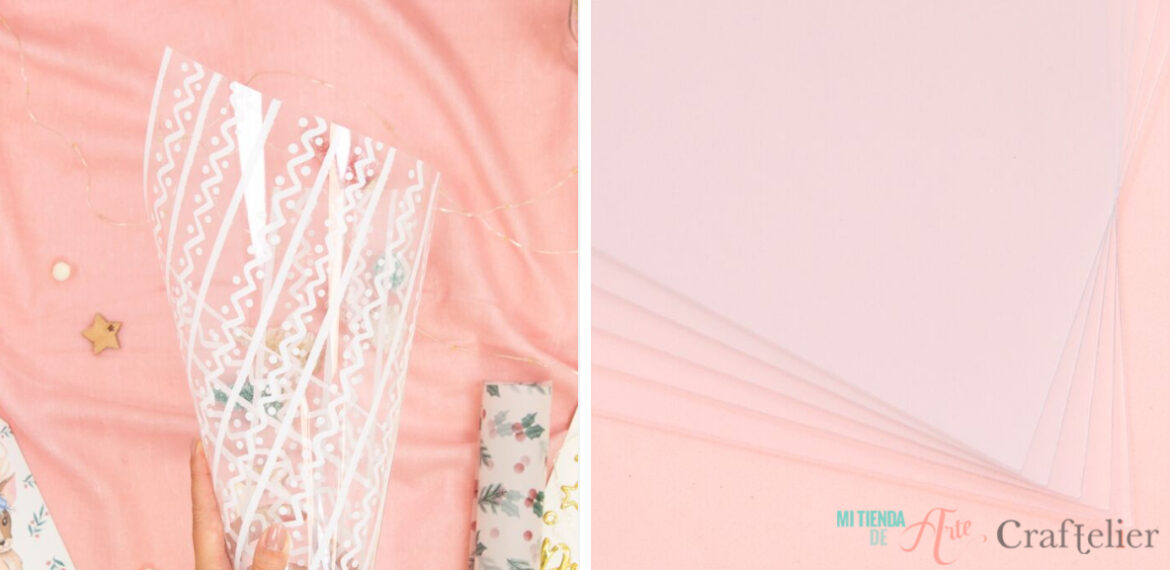
-Acetate paper: a transparent type of paper that is widely used in scrapbooking and card making. Shakers or pockets are often made with acetate paper. It is very easy to work with and although it is very common to find it clear, lately it is becoming fashionable to use acetate with different patterns or solid colours.
Scrapbooking Paper
As it's the most common paper used in crafts, let's go deeper into it as there are many types. One of the most important characteristics of paper is its thickness, and this is what will determine whether it is most suitable for certain techniques or others.
The first to clarify is that thin paper, that's not mean a low-quality paper. A thin paper can have great quality, although maybe it's not the best option for some projects in which, for example, we have to apply liquid glue. It is simply paper designed to make other types of crafts. What's important is to choose the right paper for the techniques is going to go through.
But the most essential thing to check when buying scrapbooking paper is that it is acid and lignin-free, to prevent it from being damaged over time. The lining is a naturally found component in materials like rubber, cotton, or wood. Since paper comes from wood, is therefore naturally present in it, and it can damage your projects over time, causing the paper to yellow over time. The time in which the project will start to become damaged, it's relative. For example, if it's exposed to sunlight or direct heat sources, the spoil of paper will be faster. Eliminating lignin is easy to solve, it's normally neutralized by adding chemicals during its composition, so most of the papers you'll find will be lignin free, but is always important to check.

Paper weight
The weight of paper can be a bit tricky, as the way to measure it is not standardized. In America, for example, to know the thickness of the paper they weigh 500 sheets of paper and make the proportion. This is not the most accurate way of measuring because the size of the papers influences this a lot, and it is something not taken into account. In Europe, the way to measure grammage is by square metre, which is much more accurate.Lightweight paper
- From 70 to 90 gr. paper weight
- They are thin sheets that are easy to handle and can be folded easily. These are paper sheets for everyday use, such as those used in books or photocopies.
Medium weight papers
- From 90 to 120 gr paper weight.
- It is recommendable to make a fold in the paper before creasing it to avoid unwanted marks or tears in the paper.
- It is thick enough to write on without the ink showing on the back of the paper. Very common to make cards.
Heavyweight paper
- From 120 to 170 gr. paper weight.
- It is necessary to make a crease on it before folding to avoid marks and tears.
- It is similar to light cardboard and its use is very popular in cards and scrapbooking projects, as liquid adhesives can be used on it without causing any damage. They are also perfect for die-cutting and embossing.
- Due to their extensive use in crafts, they can be found in many designs, finishes, and textures.
Extra-Heavyweight papers
- From 170 to 260 gr. paper weight or up.
- They are widely used in scrapbooking albums, for lining cardboard structures or covers. They are also perfect for painting with watercolours and to use in Mixed Media projects. Due to their high thickness, they can absorb a lot of water, so we can use water-based techniques or liquid adhesives. Also, there won't be any problem decorating them adding some lightweight decorations or with most Mixed Media techniques.
- It is the best paper for die-cutting, especially those dies with lots of intricate details.

We hope that you find this post useful, and you'll use it as a guide to choose the best paper for each project. Tell us in the comments if there's come topic you'll like us to talk about :)