In this post, we're explaining the different watercolour formats available on the market and giving you 5 ideas for including them in your scrapbooking projects.
You may have noticed that the use of watercolours is becoming more widespread in the world of scrapbooking. At the beginning it was more for Mixed Media fans, but that natural and funny finish that they give has made watercolours to become the protagonists in the scrap collections that come out every season. Therefore, during the last months, and even years, we've seen many collections of our admired artists Amy Tangerine, Dear Lizzy, or Payge Evans with great watercolour details, creating motifs for the backgrounds of the papers or even including titles and calligraphic words imitating watercolour.
This leads us to a clear conclusion: watercolours are in, and if you consider yourself a good scrapbooker you have to dare to include watercolour in your creative routines. Don't be afraid of it!
There are many ways to include watercolour in our projects, but before we get started it's important to know the different watercolour formats we can find on the market, what their differences are, and thus know which models suit us the best according to our tastes and needs. Let's go!
 Among the watercolours we can distinguish the following one:
1. Solid Watercolours: these are usually the most practical and easiest ones to start with — and also perfect for storing and carrying. They are perfect for painting small designs, since the amount of pigment available is less than in other types of watercolours and, therefore, they aren't the best ones to use on large surfaces, mainly because you'd end up with the watercolour in a blink of an eye!
To use them we must wet the surface of the watercolour with a wet brush.
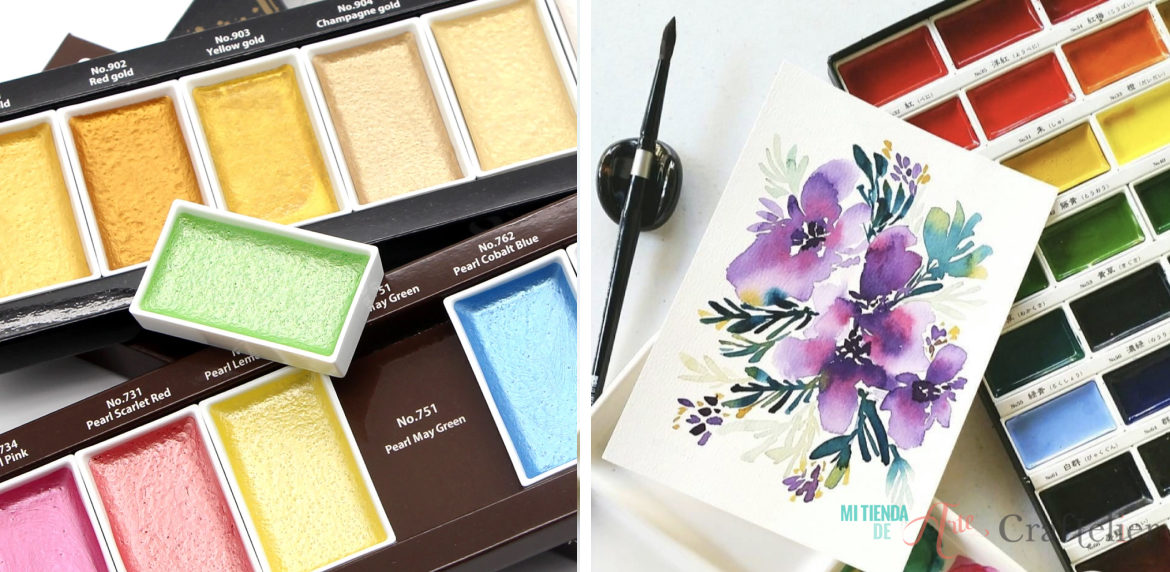
If you want to use solid watercolours, but in a larger format, you can find them in godets or in even larger formats, as the ones from Japanese brand Kuretake Gansai Tambi, a very well-known watercolour brand, whose watercolours are very creamy and highly pigmented.
 2. Watercolours in tubes: a classic format widely used by artists. At first, they may not seem as practical as other options, but they have great plasticity. They allow us to make some mixtures and achieve nuances that we wouldn't achieve if we used other types of watercolours.
To use these, apply the necessary amount of colour in a palette and extend it with a wet brush until you obtain the desired texture, shine and tone.
3. Liquid watercolours: a great option for scrapbooking! These watercolours are characterized by their great versatility, allowing us to apply them not only with a brush but with sponges, rags or direct dripping.
 4. Watercolour pencils: they are the last ones to arrive in the market, but they already have many of us hooked on them because of how practical and easy they are to use. These pencils, when mixed with water, allow us to create watercolour effects. To do this first paint the surface and then, with a wet brush, paint the area to dissolve the colour. Remember that it's very important not to wet the tip of the pencil because we could destroy it.
This way of practising watercolour is perfect to start in the technique and great for our scrap projects, we paint the same way we would do with our normal pens, we can draw, write and reach the most detailed areas with the tip well sharpened.
FOTO
Of course, we don't need to explain that to complete your watercolour kit you'll need some good brushes or even a brush with a water tank (which is very practical) and some watercolour quality paper to make the colour and water flow evenly (the coolest effects are very difficult to achieve on standard paper).
And now, let's go with ideas for using watercolours in our daily work:
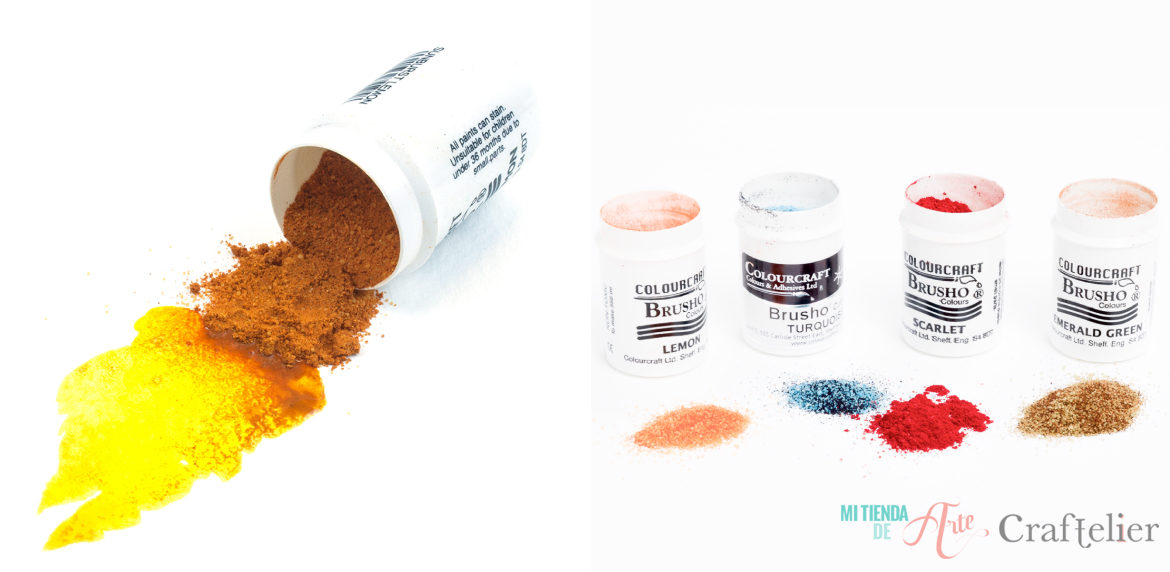
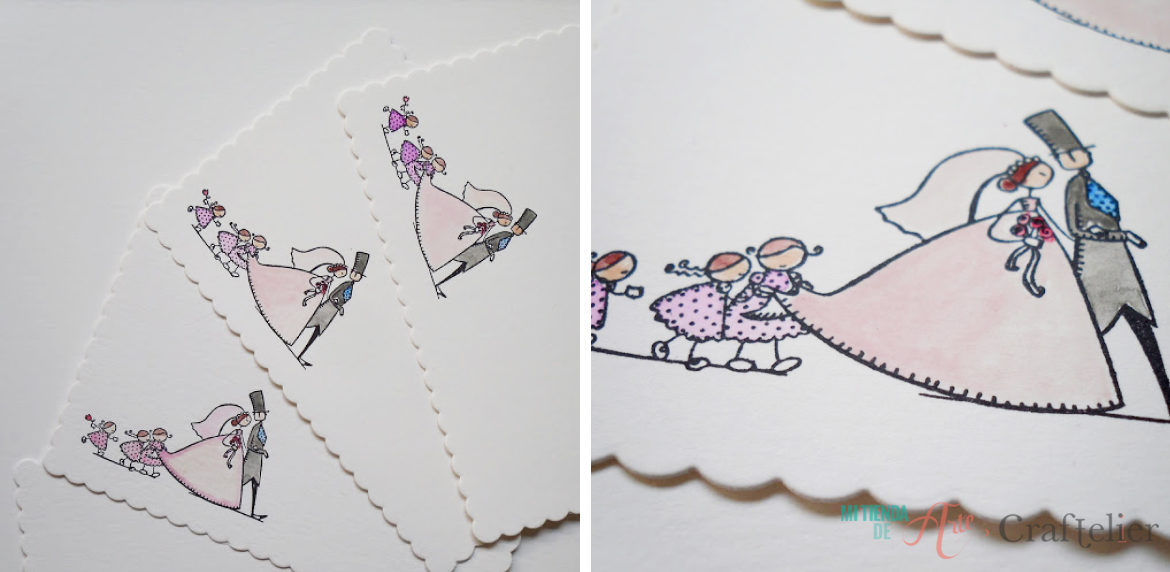 Bienve Prieto has an original way of painting stamps. He uses the Brusho Crystal Colors (watercolours in the form of pigments). On a palette, he adds a bit of water, a few pigments, mixes it slightly and stains the stamps with this mixture. This way, he obtains an irregular result over the paper, but it gives the stamp a funny and easygoing touch so characteristic of watercolour.
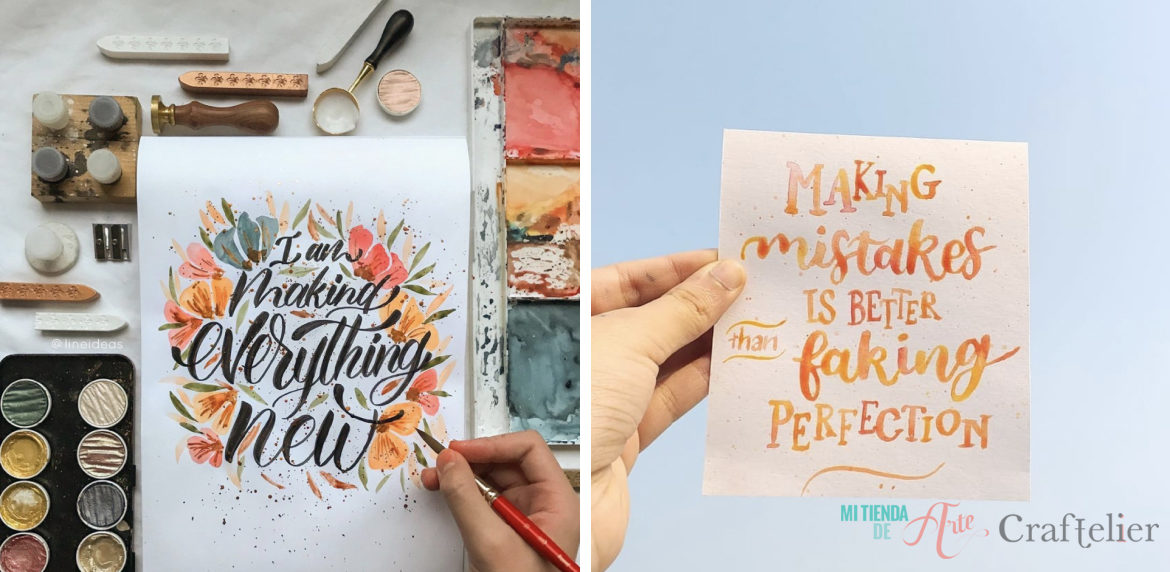 In this case, to make it easier and to control the color better, we encourage you to use the watercolors in tablet form and to wet the brush in water and pigment from time to time.
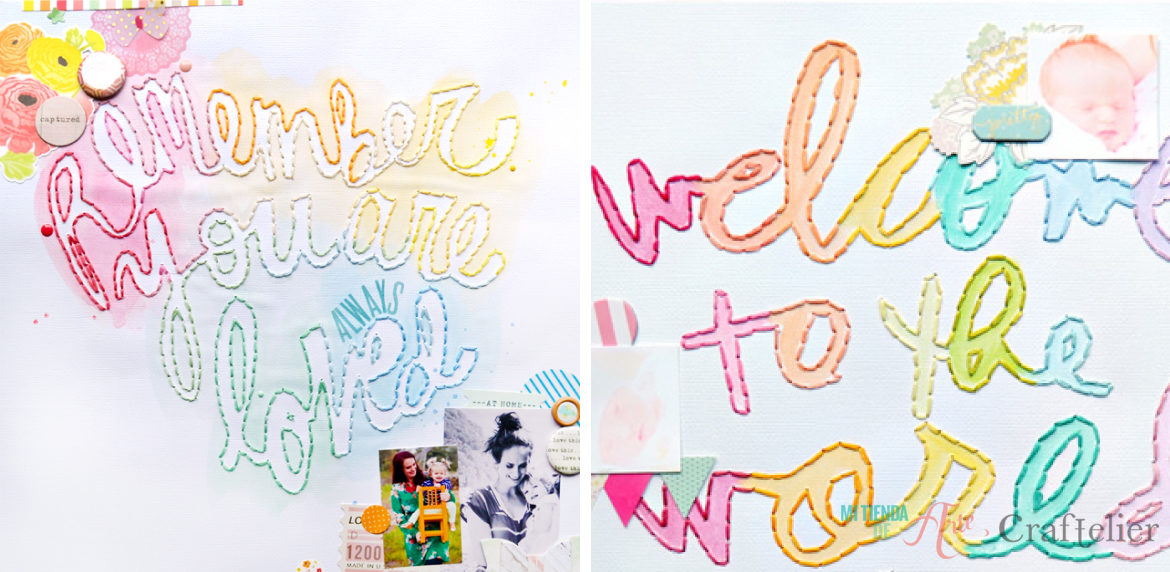
Another idea we love is the combination of sewing and watercolor that Paige Evans does in many of her Lay Outs, it looks spectacular! First make the title (by hand, with stamps, with the Cameo...), sew the edges with colored threads and then, paint the interior of the letters with watercolor. It looks amazing! Doesn't it?
Among the watercolours we can distinguish the following one:
1. Solid Watercolours: these are usually the most practical and easiest ones to start with — and also perfect for storing and carrying. They are perfect for painting small designs, since the amount of pigment available is less than in other types of watercolours and, therefore, they aren't the best ones to use on large surfaces, mainly because you'd end up with the watercolour in a blink of an eye!
To use them we must wet the surface of the watercolour with a wet brush.
If you want to use solid watercolours, but in a larger format, you can find them in godets or in even larger formats, as the ones from Japanese brand Kuretake Gansai Tambi, a very well-known watercolour brand, whose watercolours are very creamy and highly pigmented.
2. Watercolours in tubes: a classic format widely used by artists. At first, they may not seem as practical as other options, but they have great plasticity. They allow us to make some mixtures and achieve nuances that we wouldn't achieve if we used other types of watercolours.
To use these, apply the necessary amount of colour in a palette and extend it with a wet brush until you obtain the desired texture, shine and tone.
3. Liquid watercolours: a great option for scrapbooking! These watercolours are characterized by their great versatility, allowing us to apply them not only with a brush but with sponges, rags or direct dripping.
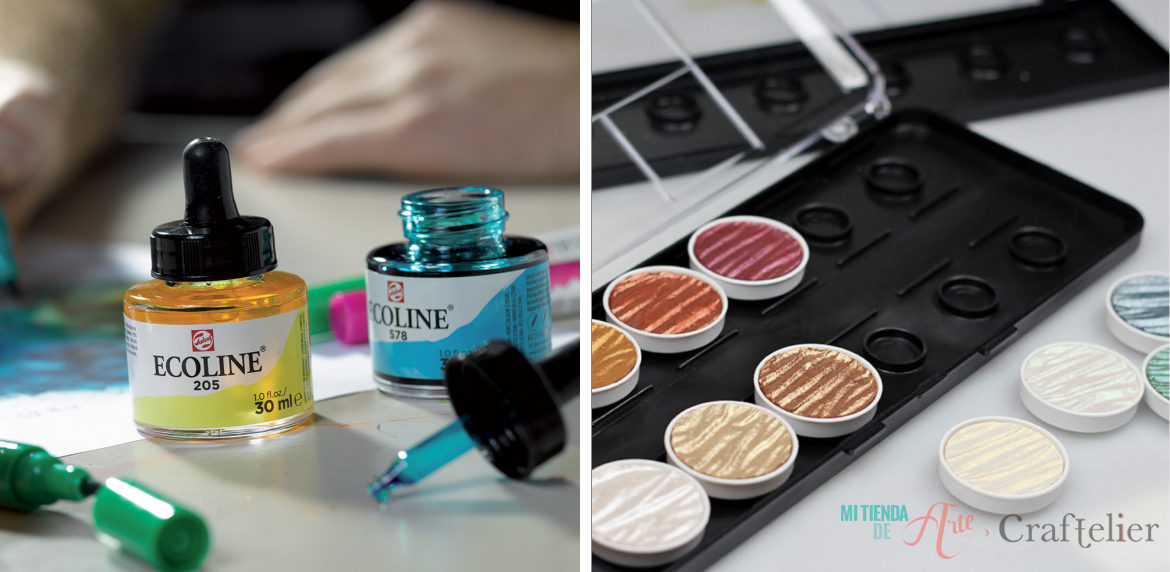
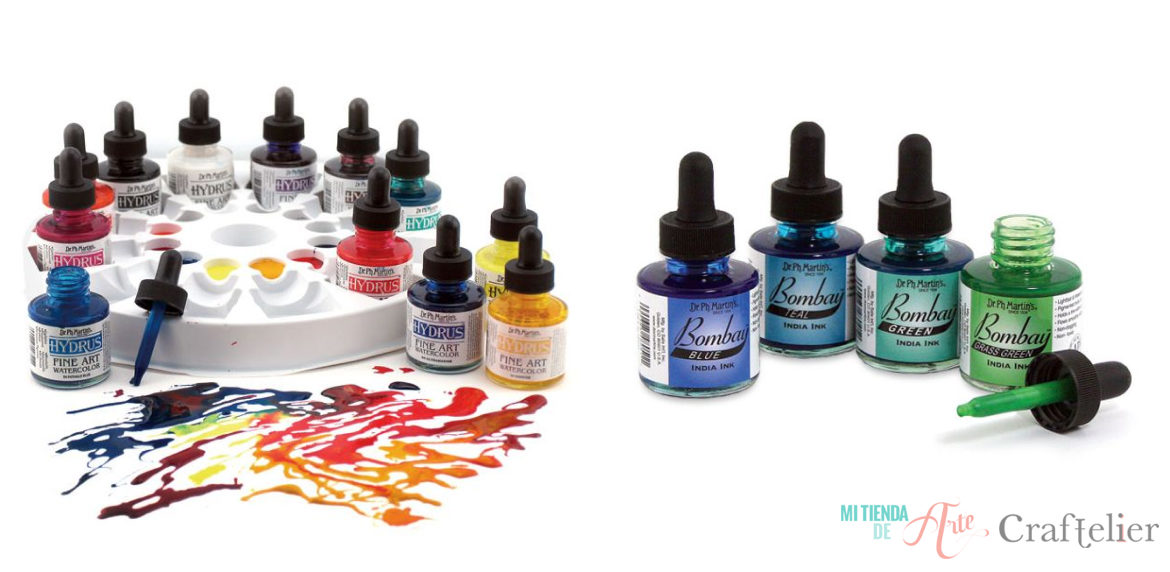
They've got a great pigmentation capacity and, as they're more fluid, they penetrate the paper better. For this reason, the colour is maintained in time very vividly, but it's more difficult to manipulate once they start to dry. Our favourite without a doubt, the Ecolines and Dr. Ph. Martin's.
4. Watercolour pencils: they are the last ones to arrive in the market, but they already have many of us hooked on them because of how practical and easy they are to use. These pencils, when mixed with water, allow us to create watercolour effects. To do this first paint the surface and then, with a wet brush, paint the area to dissolve the colour. Remember that it's very important not to wet the tip of the pencil because we could destroy it.
This way of practising watercolour is perfect to start in the technique and great for our scrap projects, we paint the same way we would do with our normal pens, we can draw, write and reach the most detailed areas with the tip well sharpened.
FOTO
Of course, we don't need to explain that to complete your watercolour kit you'll need some good brushes or even a brush with a water tank (which is very practical) and some watercolour quality paper to make the colour and water flow evenly (the coolest effects are very difficult to achieve on standard paper).
And now, let's go with ideas for using watercolours in our daily work:
Painting stamps:
If we want to give some colour to our stamps, there isn't a better option than to use watercolours - you can use the watercolour pencils or the brush with deposit, so there won't be any small detail we cannot paint perfectly! You can stamp, paint, and then cut out the stamp or paint directly on the final project. Remember to apply a waterproof ink. We don't want everything to smear when we start applying water with the brush! You can use Versafine or Archival Ink.
Bienve Prieto has an original way of painting stamps. He uses the Brusho Crystal Colors (watercolours in the form of pigments). On a palette, he adds a bit of water, a few pigments, mixes it slightly and stains the stamps with this mixture. This way, he obtains an irregular result over the paper, but it gives the stamp a funny and easygoing touch so characteristic of watercolour.
Writing titles:
In the past, we've spoken about the trend of calligraphy and, even more so, about calligraphy with watercolors. Without a doubt, we love to add phrases and words to our projects and more if we give a natural look, achieved with handwriting. So, why not apply it to our scrapbooking projects? You don't need to know calligraphy or lettering. Just write in your own way, and give your project a personal touch. We love Amy Tangerine's inspirational phrases!
In this case, to make it easier and to control the color better, we encourage you to use the watercolors in tablet form and to wet the brush in water and pigment from time to time.
Another idea we love is the combination of sewing and watercolor that Paige Evans does in many of her Lay Outs, it looks spectacular! First make the title (by hand, with stamps, with the Cameo...), sew the edges with colored threads and then, paint the interior of the letters with watercolor. It looks amazing! Doesn't it?
Make some background
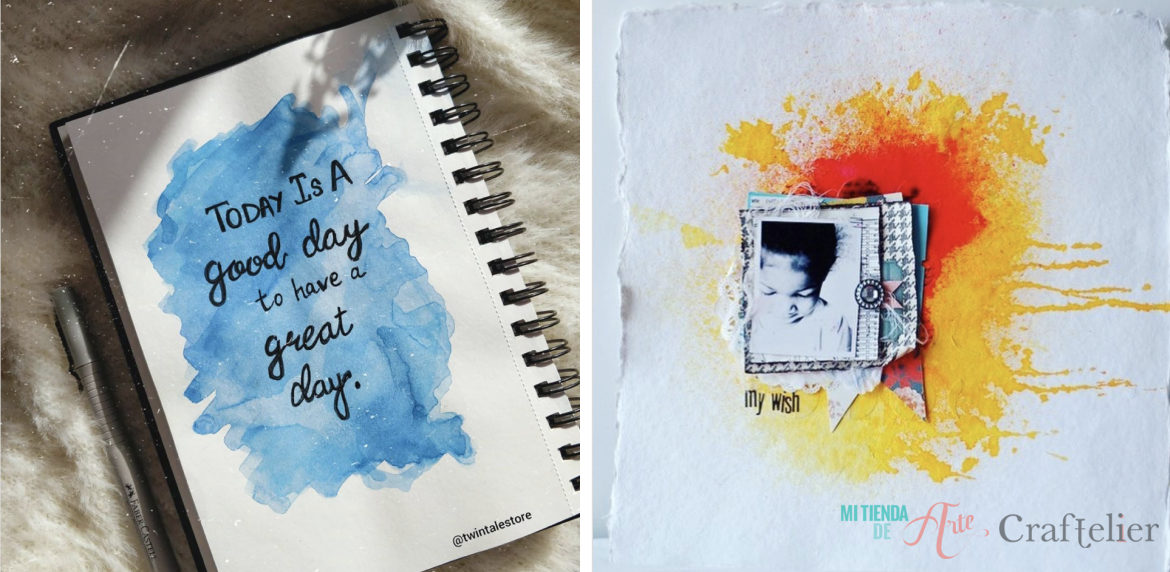
Surely this is one of the most common uses of watercolours within scrap. Imagination is key: paint with a brush, with a sponge, to create glazes, to print, to mix with shaving cream, apply it with a spatula, etc. It's perfect for our Mixed Media projects and to create our own scrap papers, Project Life cards, etc. Don't be obsessed with perfection, the important thing is to understand that in imperfection lies the beauty.
@twintalestore / @alwaysscrappy
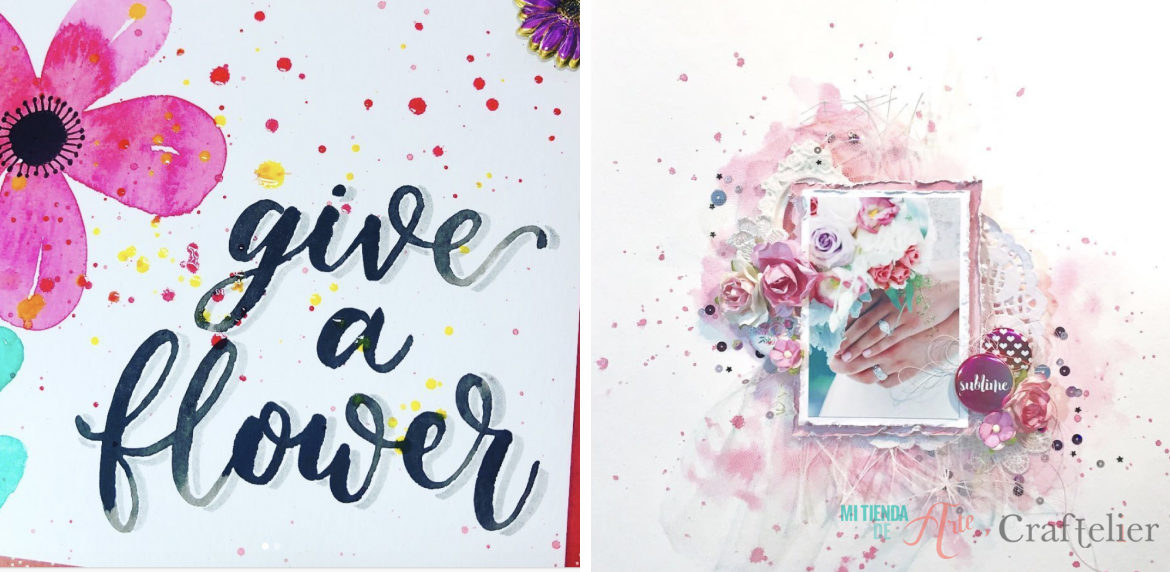
Adding drops and stains to our layouts
If you are new with watercolours, maybe the best is to use them just to give a touch of colour to your projects. With a brush or the dropper, add some colour drops to your project. It's an easy way to get natural designs. Before start working with watercolour, practice different techniques with various types of brushes. You'll discover that with different angles and changing the intensity of the touches you can get very different stains. TRICK! If you don't want your photos to be stained with paint, place a piece of paper over them before applying the drops, so there's nothing to worry about!
Embossing resistance
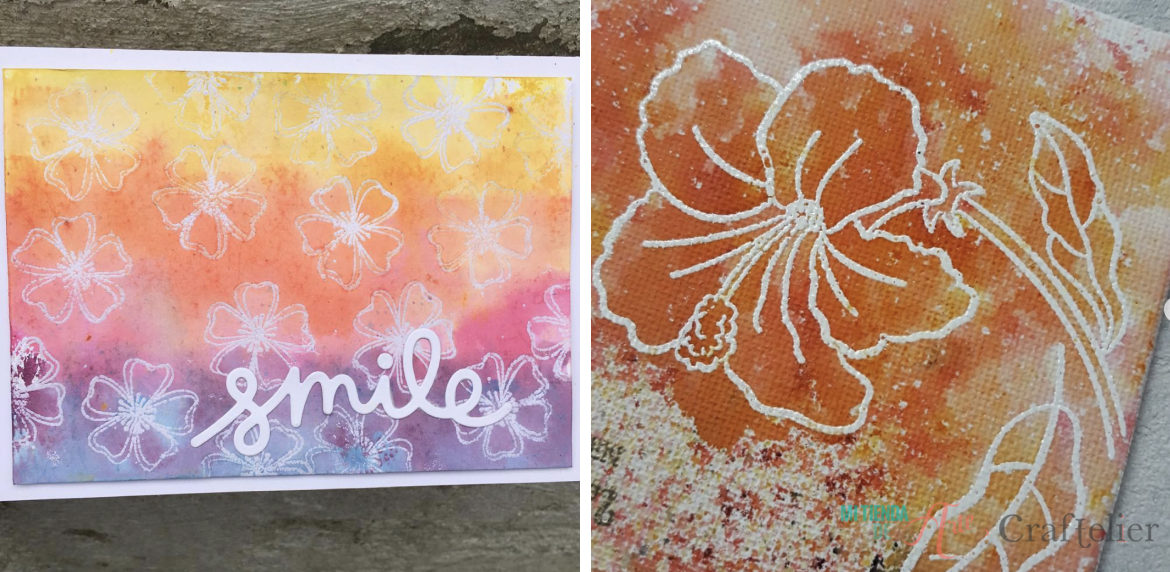
Don't be frightened by this complex name because it's simpler than it seems! You have to make a hot embossing and then, paint with watercolours to extend them and the embossing will be in its original colour (it makes resistance). The most eye-catching examples are using white or transparent embossing powders, they stand out much more. The result is very cool as we can see in the images.
@muditta / @kreativtisch_feuerwer
TIP! If you want the colours to spread out and mix in a more " out of control" way, you can apply water all over the drawing before starting with the watercolours. For sure, there are many more ways to apply some pop of colour with the help of watercolours, we've just collected the ones that you can see the most and that are great to start with if you're new. We assure you that it's addictive! Watercolours have something special and unique, water always surprises us, and we'll never get the same result. We hope that with all these ideas you will be encouraged to use watercolours! Tell us about it!