There are no reviews about this product yet
In Neuroscientist at the Prado Museum
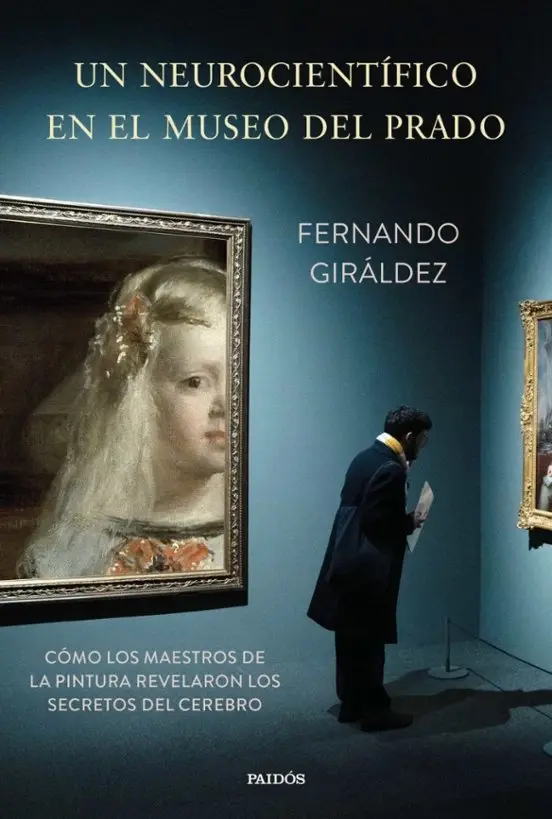
In A Neuroscientist in the Prado Museum, Fernando Giráldez, professor emeritus and expert in neuroscience, rediscovers classical art through neuroscience and reveals how the great masters of painting unravelled, without knowing it, the mysteries of the human brain.
For one reason or another, we have all been spellbound by a work of art. But what is it that provokes such attraction, and where is the secret that captivates our senses? Fernando Giráldez, neuroscientist, guides us through the great works of the Prado Museum and reveals how the masters of painting have explored the brain to get to the bottom of the human mind.
Giráldez immerses us in the magic with which these artists discovered how to achieve two impossibilities: representing space and vitality on a canvas that is flat and static. Vision is something so natural to us that we are led to believe that the world is just as we see it, but in reality it is full of profoundly counter-intuitive mechanisms.
Pictorial techniques such as sfumato, stain painting or aerial perspective do nothing more than effectively delve into the complex mechanisms of visual perception to find ways to trick the brain into persuading it to see non-existent realities. Thus, in this work we will discover how artists as diverse as Bosch, Leonardo, Titian, Velázquez and Sorolla developed a masterful reverse engineering of visual perception to provoke illusions of reality.
A Neuroscientist in the Prado Museum proposes a fruitful dialogue between art and science to answer the question of how art seduces the human mind. In doing so, it also offers a reflection on our relationship with the world and how we experience it. In this fascinating journey, art lovers and the curious can enjoy a new perspective on classical painting and delve deeper into the mechanisms of artistic creation.
Publisher: Paidós



| Brand | Editorial |
|---|---|
| Subject | Origami |
| Language | Spanish |