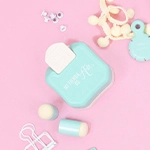
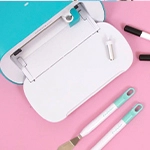
Do you hesitate between the Cinch and the Zutter and you don't know which one you should buy? Do you know what are the differences between them? Today, in this post we're comparing them to explain their main differences and similarities.
When you start in scrapbooking world, one of the tools that cannot be missing among your essentials is a binder. But once you know you need it, the big question cames: which one is the best for me? For sure, many of you feel identified with this situation. It's then when you start to investigate, read and search the different characteristics of each one, but you may feel a little bit lost. There's so much information that it's overwhelming. Therefore, we want to make things easier for you, that’s the reason we’ve prepared this article about binding machines. We’ve analysed two of the most common models to help you decide which one is the best for you.

By now you surely know that there are two different types of binding machines - the ones that take our sleep away because we don't know which one to choose - the Cinch and the Zutter. Both of them serve the same purpose, but they also have differences that are worthy to mention.
The Cinch is a large surface binding machine - with measurements in both centimetres and inches - with great advantages to highlight:
- It’s stability: thanks to its large base it can be used without too much effort.
- Possibility of punching specific holes: we can punch specific holes and choose the number of holes we want to have. This allows us to have a great versatility and to be more creative in our projects.
- Side notches that allow us to place the spiral or wire while you are inserting the pages of your project comfortably and effectively.
- Large waste drawer to store all the cut pieces of paper.

The classic binding machine is available blue and makes round binding holes. If, on the contrary, you want to make square holes, which look very trendy, you must go for the Stripped Cinch by Heidi Swapp. Except for this big little difference, the machines are absolutely the same in terms of weight (3.6 kg), measurements (29.2x20.3x12.7 cm.), operation and capacity to punch up to 20 pages of 80 gr.
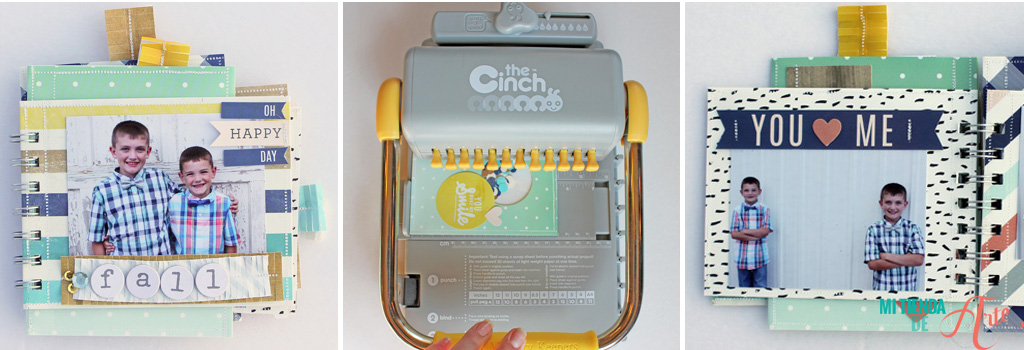
Definitely, the Cinch is bigger and more robust, you have more stability and, therefore, it is more comfortable to use.
The Zutter or Bind-it-All is another of the most common binding machines. Due to its size, it is often known as the travel binder. Among its characteristics we highlight the following positive points:
- It's reduced size: it’s light, small and portable.
- Makes square holes.
- Ability to punch hard cardboard without any problem.
- It has accessories, such as the space bar, which allows us to make the holes closer to the edge of the paper (very useful if our project is very large).

With the Bind-it-All the binding is done vertically, so you have to make sure that the project does not move. Until you get used to it- you’ll need a little bit of patience but once you have used it a couple of times, you’ll find out that the simplicity of the machine and its small size are often a great advantage.
So, both are very useful machines and the one you choose might depend a little on the space you have and the use you want to give them and, also, on your economy. Without a doubt, the Cinch is more complete, stable and easy to use. However, the Bind-it-All is much lighter and once you know how it works, it’s very practical. In addition, it’s cheaper than the Cinch.
Important things to take into account: the two binding machines work with the same pitch per inch, that is, the distance between the holes is the same and they use the same type of rings, 2.1. All Cinch rings are for the Zutter and vice versa.

In case you’ haven’t decided yet which one you want, there're some photos for you below. Some projects have been carried out with both so that you can clear your doubts about the different uses. As you will see, beyond using a binding machine or another, the interesting thing is that when you have already taken the trick from the machine, you can play with the different possibilities and configurations of binding and with the varied use you can give to the spirals and rings.
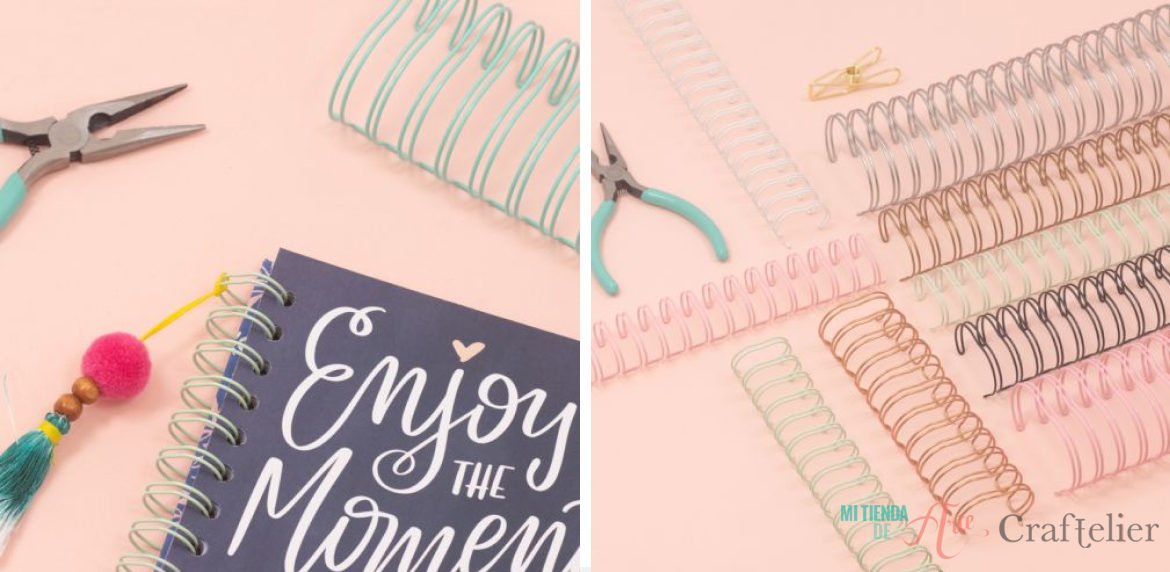
 We cannot end this entry without talking about the best companion for our binder, the wires, of course! There are many different types of wires, depending on the thickness of our projects and in different colours, to be able to combine with our decorations. We would like to remind you that Crafterlier Basics, our brand, has its own range of rings, available in three sizes: 0.75", 1! and 1.25" in a wide range of colours from the most basic such as white, black or silver to the most special such as mint, fuchsia or turquoise, not forgetting our line in metallic tones in which we highlight bronze, silver or rose gold.

And now, with all this information, why binding machine have you decided or did you decide? We would like to know your opinion, we will solve all the doubts that you may have in the comments.