

You may have heard of alcohol inks but you're not quite sure what exactly they are and how they differ from other inks we can find on the market. In this post, we're solving all your doubts about alcohol inks.
When we start a new activity or hobby, we have many doubts about the materials we may need and the techniques we'll have to learn. The world of inks isn't different. There are different types of inks that differ in their composition, in their uses or in their application.
What are alcohol inks?
These inks are acid-free, permanent, water-resistant, fast-drying, and highly pigmented. Alcohol inks are inks whose composition is alcohol-based, i.e. most of their composition consists of alcohol. This makes these inks very versatile, as they can be used on any non-porous surface such as glass, metal, plastic, smooth stone, leather, ceramics, or polymer clay. Of course, we can use them on any type of paper although we'll obtain better results if we use them over non-porous papers such as photographic paper or YUPO papers, which are specially designed for its use with alcohol inks. That's why we can use alcohol inks in fine art projects, calligraphy, cards, scrapbooking...
How do alcohol-based inks work?
There are many techniques for applying alcohol inks, it all depends on the materials we're using and in the design, we want to achieve. However, there are several points we should know. Alcohol inks, as we have already pointed out, are permanent inks. When we apply the ink, the alcohol contained in the compound begins to evaporate, leaving only the dye on the surface, that's why once it dries, it's permanent. However, if we're working on a non-porous surface and want to make some changes to our already dried painting, we just need to add 91% alcohol to reactivate the compound so that we can work with our ink again. This can also be useful if we want to "erase" or "clean" part of our design or just give it a “worn-out” look to achieve a vintage style.
These inks allow us to perform various techniques. One of the most common techniques when using alcohol-based inks is layering. As they are permanent and dry very quickly, we can work with one colour and once dry, use other colours. Doing so, we achieve a layered effect, as the colours don't mix with each other. If, on the contrary, we want the colours to mix with each other, all we have to do is to apply the second colour before the ink dries or to add 91º alcohol to reactivate the dried ink.
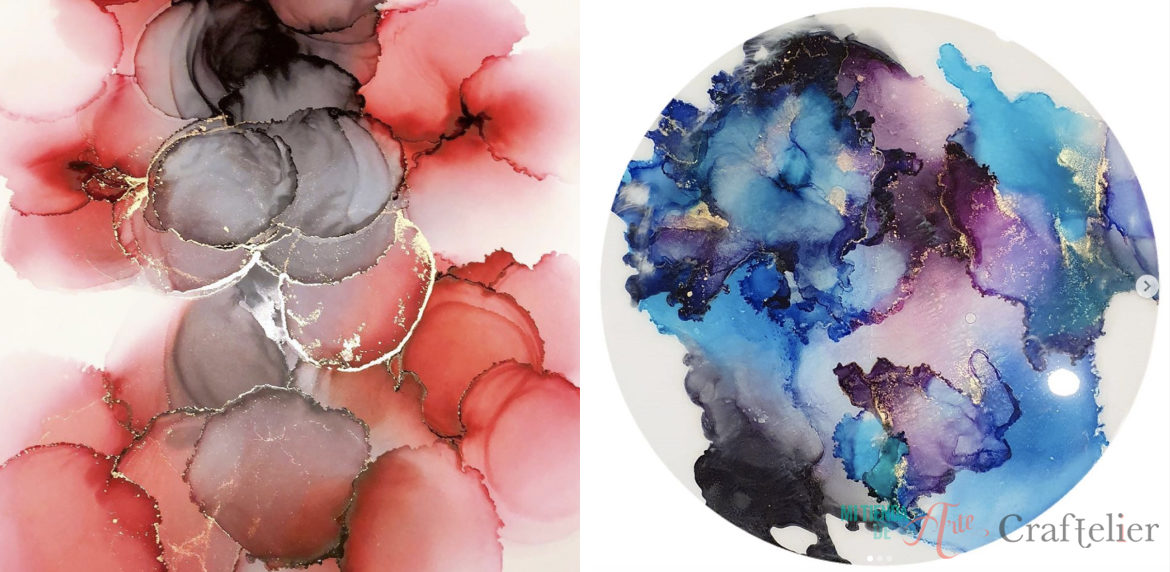
@natural.leaf10 / @sarah_pollitt_resin_art
How to apply alcohol inks?
Using these inks is very simple, we pour a few drops over the surface we want to work, with the help of the dropper that is included in the ink bottle and then, start spreading the ink.
Once we have the ink on the surface, it's time to work with it. There are several ways of doing so, we can use a blower, a heat gun (in this case we could use a hairdryer, but we have to take into account that an excess of power will remove all the paint, and an excess of hot air, will burn the paper), with ink applicators ... The instrument we use will depend a lot on the final result we want our project to have.
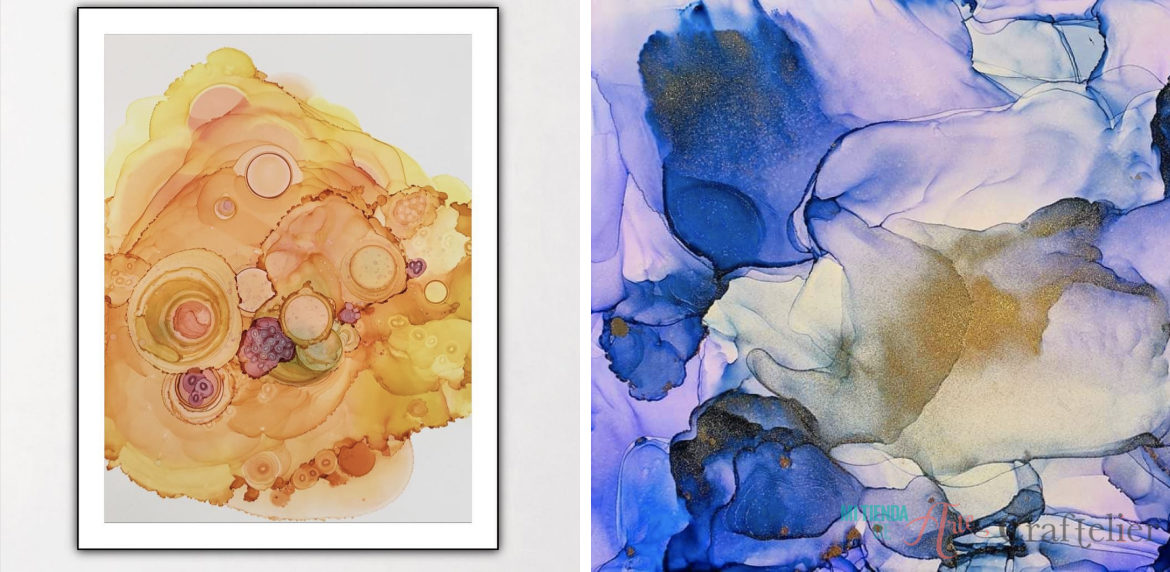
Besides, we can manipulate the ink as if it were watercolour. With the help of a brush, we can work with it just as we would with a watercolour, with the difference that instead of diluting it with water, we must use diluent alcohol.
There are artists who prefer to use alcohol inks with brushes with water deposit. Being a liquid compound, alcohol inks behave perfectly with this kind of tools.
Another option, if we prefer, is to pour some ink into a sprayer, along with some alcohol to make the mixture even more liquid, and spray it onto a surface.
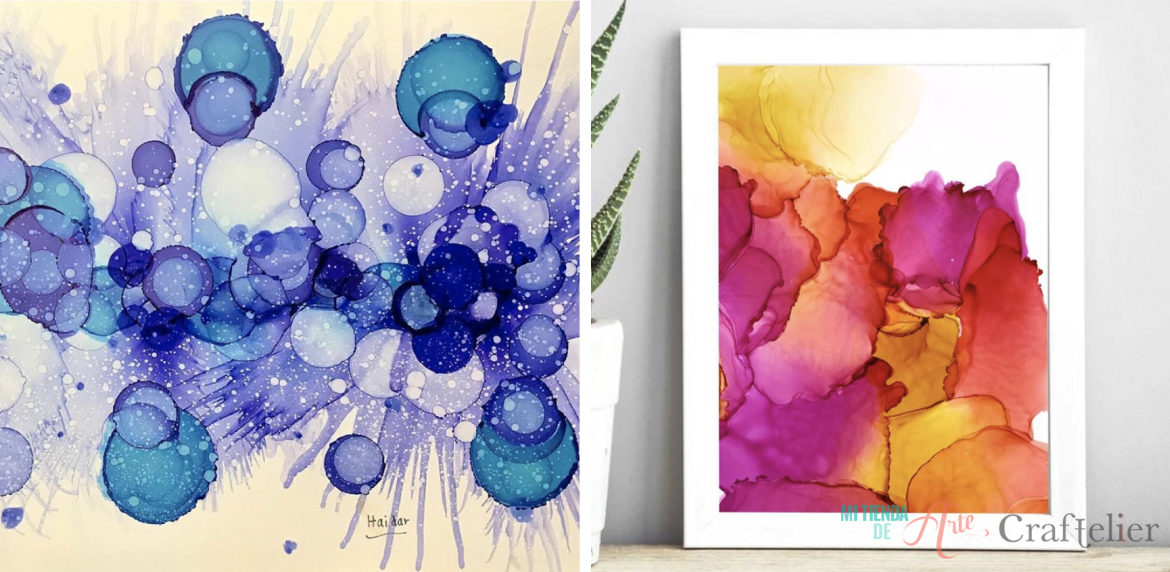
@haidar_abstractart / @gwenbastiaan
Tim Holtz's Alcohol Inks
There is a wide range of colours of alcohol inks. One of the most famous alcohol-based inks, Tim Holtz's by Ranger, has up to 75 different pigments, in addition to the special colour lines. They are available individually or in packs of three chosen colours to be easily combined.

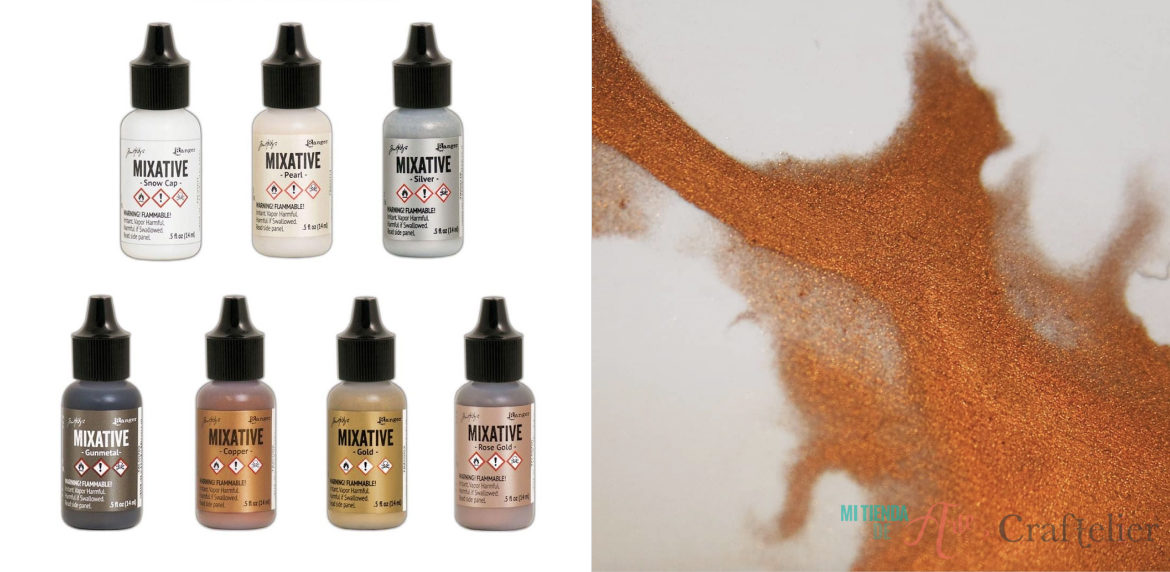
Alcohol Ink Mixative
The Alcohol Ink Mixative, in metallic colours, is the perfect line of ink to brighten up our projects, with this metallic touch that has become so fashionable in recent years. These inks need to be shaken well before its use, and they should be used in small quantities. The Mixative colour range consists of 7 different metallic shades.
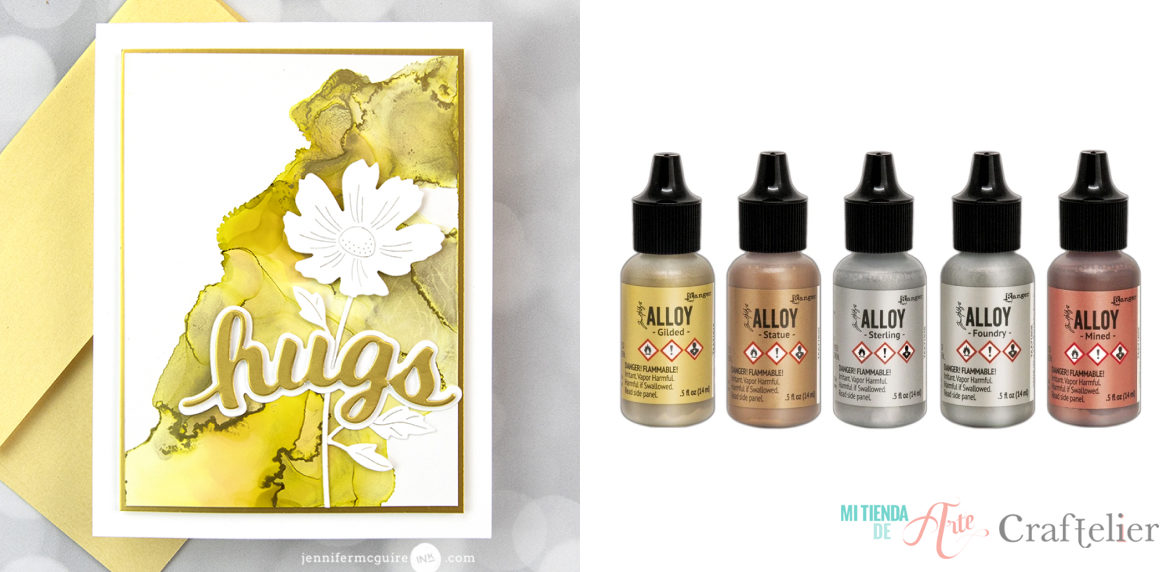
Alcohol Ink Alloy
Like the Mixatives, these inks are also metallic. The difference between the two is that while Mixative inks are luminous, Alcohol Ink Alloy are reflective, bright. The range of colours in the Alloy Inks, is of 5 metallic shades.
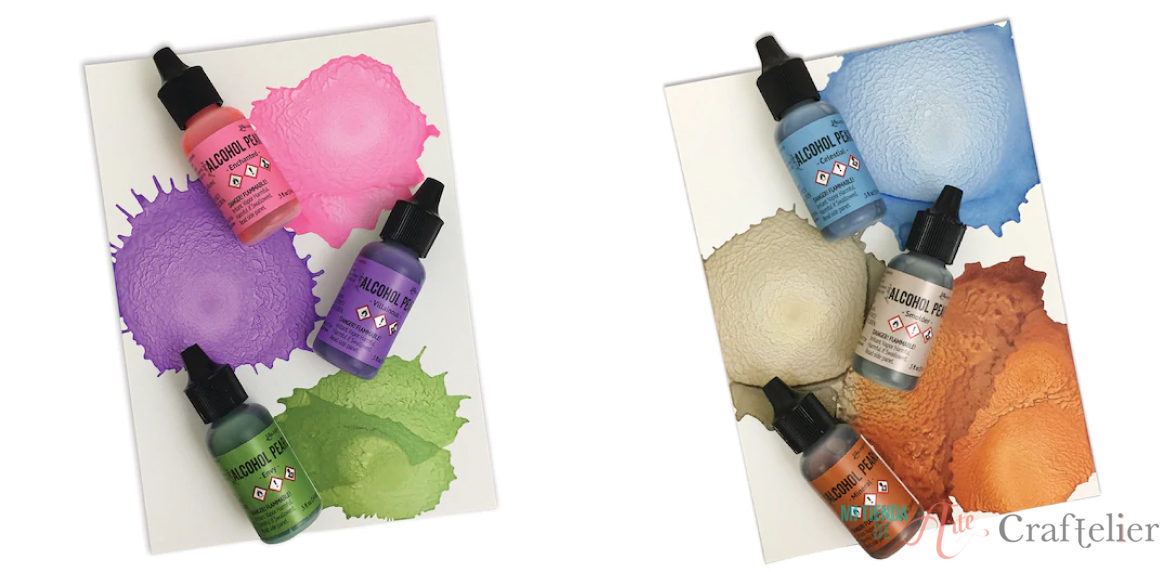
Alcohol Ink Pearl
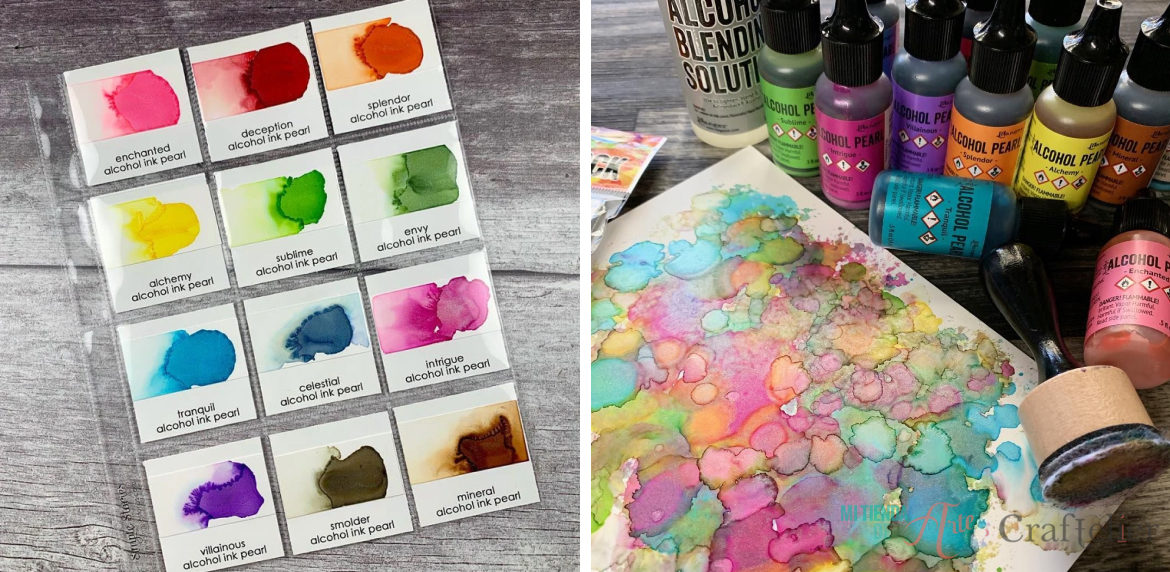
Another new range within the alcohol-based ink product line. Alcohol Ink Pearl line has a pearl effect that will be very useful to give a bright touch to our projects. This line consists of a range of 12 different colors.
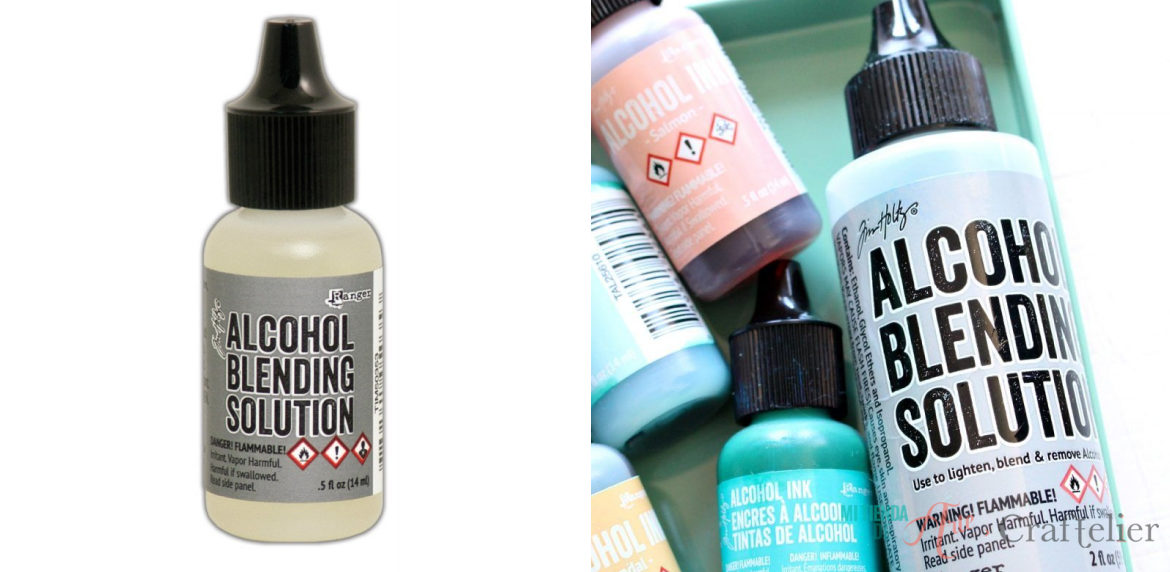
Alcohol Ink Blending Solution
This is an alcohol solution that is specially designed to easily mix different shades of our alcohol-based inks or pour over one of our inks if we want to achieve a lighter shade.
Alcohol Ink Blending Solution will also be very useful for cleaning up ink residues on tools, hands, or parts of our project (if we are working on a non-porous surface).
How do you feel about alcohol inks? Painting with them is certainly a lot of fun, isn't it? There addictive, once you begin to include them in your projects, you cannot stop doing so!
If you want to know a little bit more about alcohol inks, you can watch our video:
Would you be interested in knowing more about alcohol inks, techniques, ideas, projects we can do...? If so, leave us your doubts in the comments, and we will take note of everything ?
Until the next post!



6 Comments