There are different types of brushes depending on the technique, the type of hair, the size or shape of the brush, and sometimes, choose the perfect brush can be difficult.
To help you a little bit with picking the right brush for you, we have prepared this post based on two classifications: shape and type of hair.
In addition to these classifications, it should be noted that these brushes can also be categorized according to size, with number 1 being the smallest and number 12 the largest.
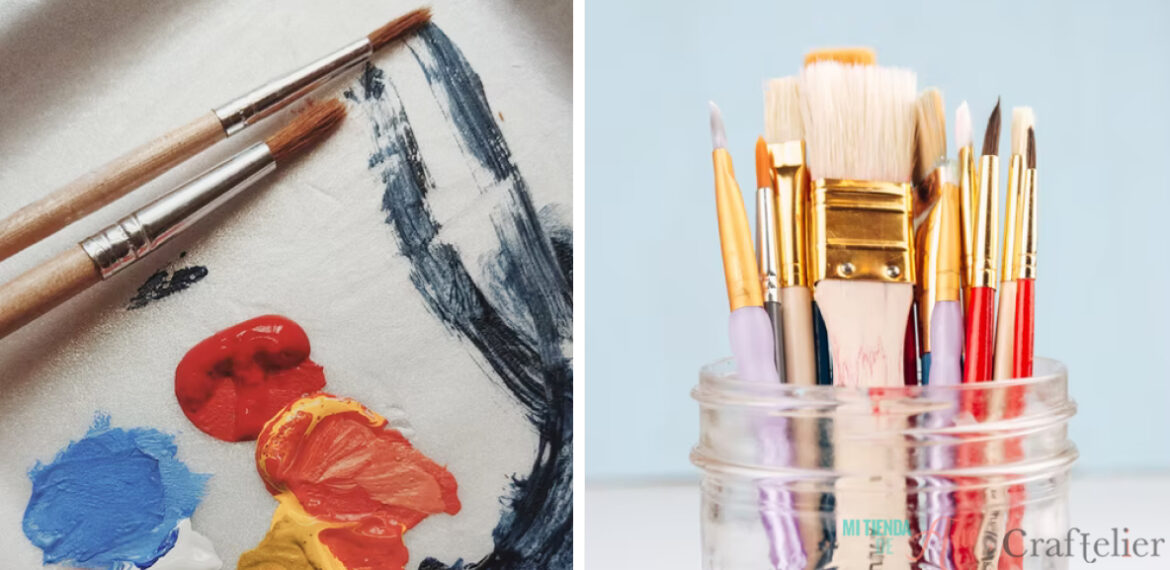
Brush classification according to their shape
Round brush
The round brush is one of the most common brushes in the world of fine arts thanks to its versatility. It can be used for filling, wetting the canvas, and making strokes of different thicknesses depending on how much force is applied. In addition, you can paint silhouettes, long lines or work on details while having great control over the brush.Fan brush
It gets its name from the characteristic shape of the bristles. This brush is perfect for gradients, blending, or colour transitions. Because it does not absorb a lot of paint, it allows you to mix colours delicately and subtly. It is also often used to make textures such as wood or grass.Bevelled brush
The bevelled brush adapts to your movements, making it perfect for both straight and curved lines.Angular brush
This brush is also known as the "petal brush", as this is the most common use for this brush due to the precision it offers and the nature of its movement.Filbert brush
A filbert brush is similar to a flat brush but with an oval tip. It is often used for making specific strokes, blurring edges, and applying shadows.Paintbrush
This is a much wider brush, with much more hair than the previous ones and, due to its great absorption capacity, it will be very useful for painting large areas or making glazes.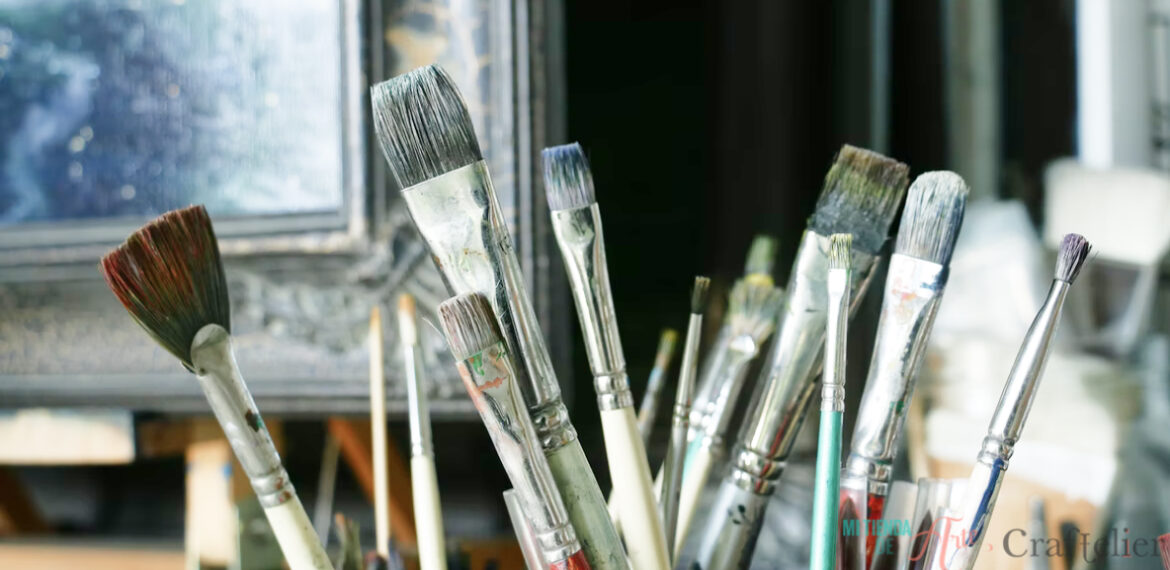
Brush classification according to the type of hair
A distinction must be made between synthetic hair and natural hair.Synthetic hairbrushes
This type of hair imitates natural hair but does not have an animal origin. Nylon or polyester filaments are used to imitate the performance of natural hair. Among the synthetic brushes, we can find different types, "Teijin" or "toray". Teijin synthetic hair is perfect for acrylic and oil painting due to its elasticity and hardness, which allows the paint to spread easily. The synthetic toray brush is often chosen by watercolours artists, and it's very easy to work with thanks to its flexibility. As an advantage over natural bristle brushes, they are much easier to clean, require less care, last longer, and, if they are of good quality, the hair won't fall out of the brush.Natural hairbrushes
Natural hairbrushes are more expensive and more delicate brushes, as they can be ruined if they are not well cared for. We can find different types of natural hair, the most common are bristle, ox, Marta Kolinsky, squirrel, or goat.Natural bristle hair
It is the most common hair type within natural hairbrushes, and it is usually used for techniques such as oil painting, although it is not exclusive to this technique. It is a very resistant, thick, and elastic hair, ideal for creating textures.Marta Kolinsky hair
Brushes with this type of bristle are very exclusive and have a high quality. The hair has great absorption and elasticity so that it's always returning to its original shape. Although it is less economical than other brushes, it will last much longer. If we are careful and take proper care of it, it can last a lifetime. Its absorption capacity allows us to paint large surfaces and detailed works.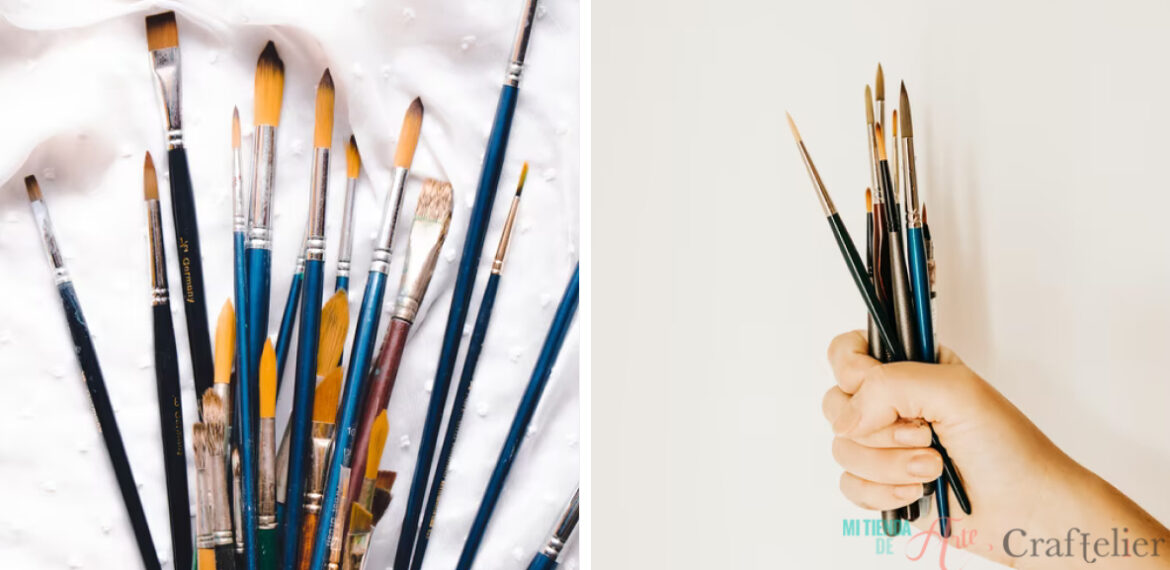
Which brushes do I need in my beginner's kit?
Now that we are clear about the main differences between brushes, it's time to get a small beginner's set. Depending on the technique we're gonna practice, we'll have to choose one brush or another. If we are going to paint with watercolour, we will have to choose brushes with elastic hairs and with great water absorption; to paint with oil, the best is a brush with a certain stiffness to be able to retain the paint; to paint with gouache, a hard bristle is recommended, and to paint with acrylics we will need resistant brushes.
As for the shape of the brush, everything will depend on our project and what we are going to paint. In any case, for a beginner's kit, it is recommended to have several sizes of round and flat brushes, which are very versatile and the most commonly used, with varied sizes such as #3, #6, #9, or #12. In addition, it is also recommended to have a cat's tongue brush and an angled brush for fine strokes.
You can also choose to buy one of our brush sets, in which you will find a variety of basic shapes and sizes for your projects.
How to wash your brushes
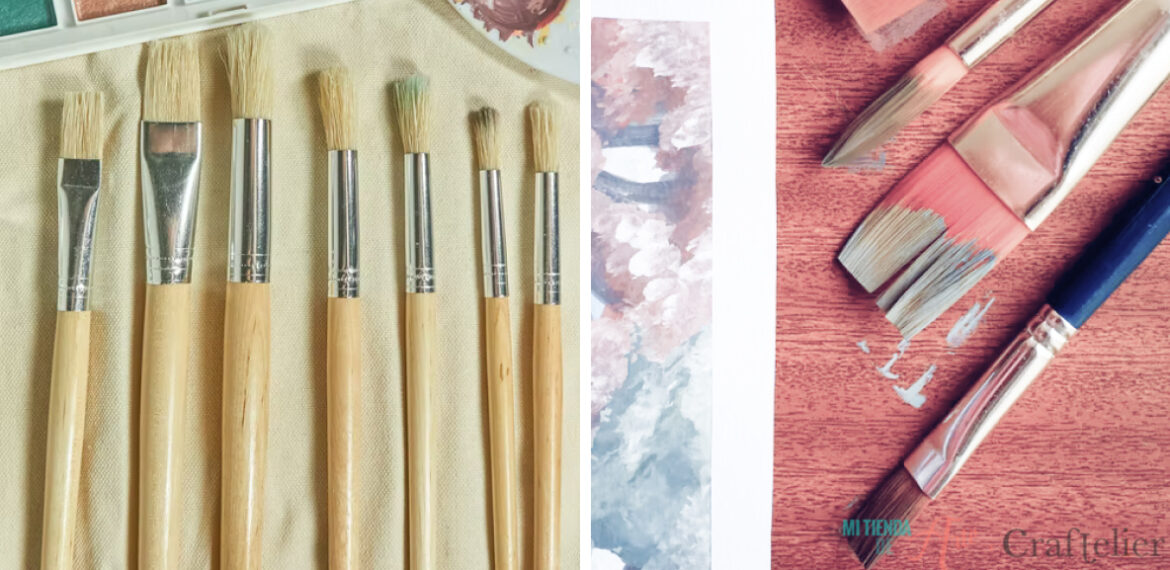
It is very important to take care of your brushes, and sometimes we forget how important this is for their durability. The first thing to remember is not to leave them in water or solvent for too long, as they may lose their shape or their bristles may weaken.
If we have used water-based paints, we will only need soap and water to clean them. If, on the other hand, we have used synthetic or oil-based paints, we will need solvents or turpentine. We will have to put some solvent in a jar and leave our brushes there for a few minutes, and then finish cleaning them with soap and water. It is also important to clean the brushes after using them and not to wait too long, as it will be much easier to clean them the fresher the paint is.