Punchers are a staple of scrapbooking: they’re one of the first tools we buy when we take up this hobby. They come in all shapes and sizes, at a wide range of prices, and (if used properly) can last for many, many years.
Types of paper punches: features and differences
Bear in mind that hole punches are designed to cut paper and card (unless otherwise specified, as in the case of multi-material models). If you feed very thin sheets of paper, plastic or fabric through them, the hole punch is likely to jam.
Almost everyone has a standard stationery hole punch at home for making holes, but there’s a whole world beyond holes for ring binders. That’s why, in this post, we’re going to show you the different types of hole punches available and how to use them.
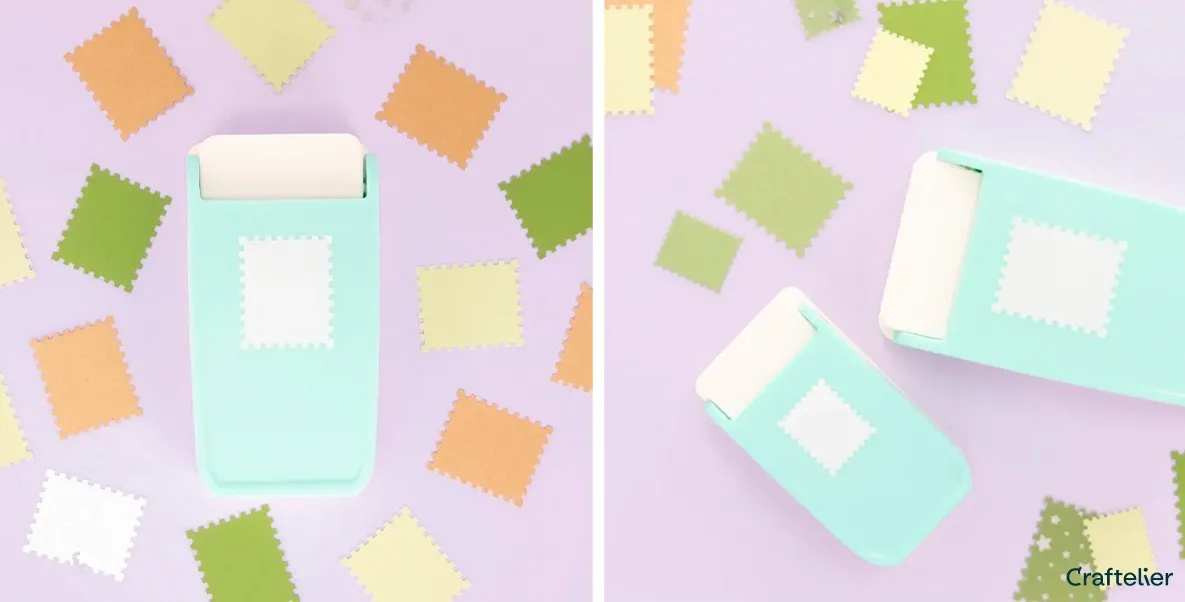
Lever-operated hole punches or pliers-style hole punches
This distinction is based on the punch’s mechanism. Lever-type punches are those that rest on the table and are operated by applying pressure to the lever to punch the holes. They are usually the most common type and allow you to create all sorts of designs, from a simple circle to a lace-like edge.
You’ll recognise this type of hole punch because it has a handle, like a pair of pliers, which you press with one hand to punch holes, whilst holding the paper in place with the other.
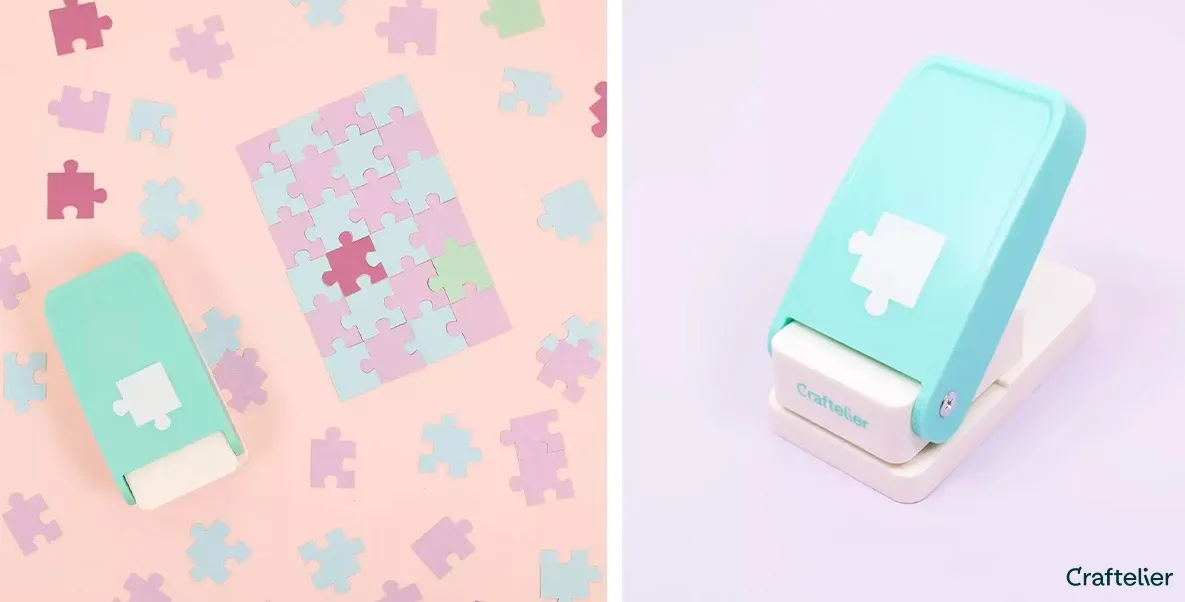
Shaped hole punches
Shaped hole punches allow us to quickly and easily cut out a perfectly shaped design. A circle, a heart, a butterfly, a star… there are endless possibilities. Simply insert the paper, press the lever, and the design is cut out. As for size, they can be very small or go up to designs measuring 8 or 10 centimetres.
The limitation of these cutters is that they cut right at the edge of the paper. For this reason, there are some magnetic cutters that allow you to cut right in the centre of the paper.
On our website, you’ll also find the Craftelier multi-material hole punches, which cut through paper, thin card, photo paper or plastic less than 0.6 mm thick, as well as many other materials. They include a locking tab so they take up less space when stored.
Corner hole punches
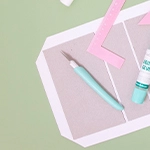
As the name suggests, these hole punches are used to decorate the corners of sheets of paper. With them, you can simply round off a corner, decorate it with an intricate design or make a notch to insert a photo. As with the previous ones, they also come in a variety of sizes depending on the design.
What’s more, there are also 3-in-1 hole punches available, meaning you can create three different designs with a single tool. These types of hole punches are extremely practical, as they offer far more possibilities for the same price whilst taking up less space.
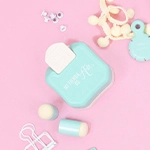
On the other hand, there are specific corner-cutting punches: the Corner Chompers by We R Makers. Their main feature is that, as well as paper and card, you can also use them to cut thicker materials, such as cardboard. As a recommendation, we’d say that the turquoise Corner Chomper for rounding corners is an absolute must-have for your scrapbooking room; it’s a staple.
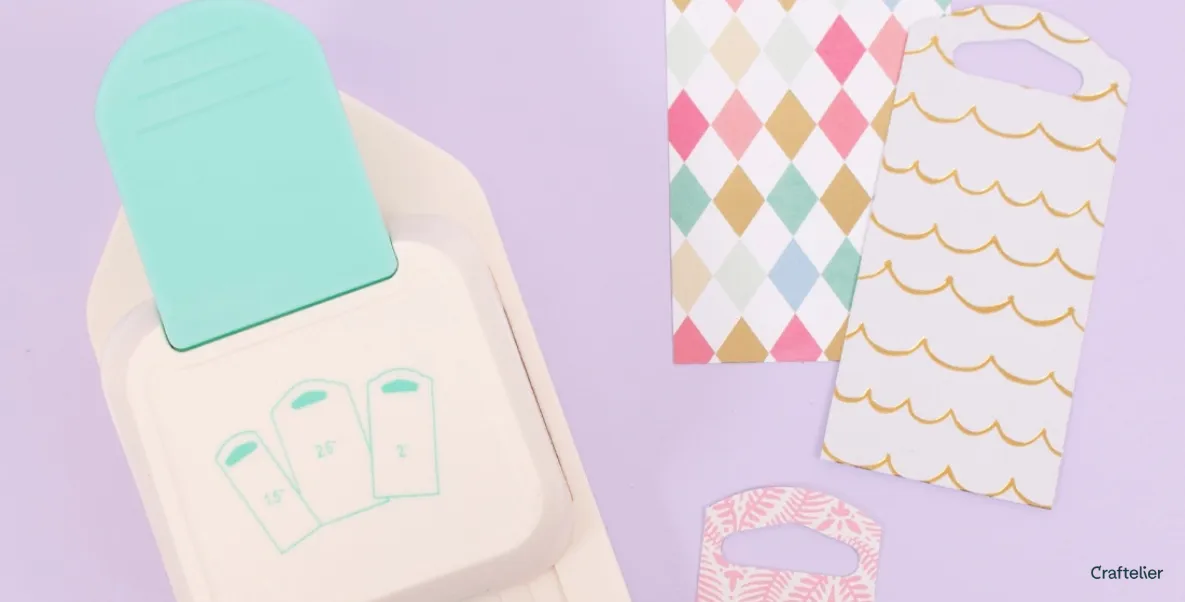
Edge punches
This type of punch is perfect for creating a pretty decorative border, whether on a page in an album, a letter, a card, a layout, etc. They create a continuous perforation, so the border can be as long as you like. To create a continuous perforation, start by punching the beginning of the paper, then move it along until that perforation lines up with the pattern on the punch. When you punch again, you’ll see that the design continues without any breaks.
Get yourself an edge punch and see how your projects take on a more professional and elegant look. Lace and scalloped designs are a sure-fire hit.
Now that you know everything you need to know about hole punches, have a look at the selection on our website and choose the designs you like best. They’re a sound investment, as you’ll use them time and time again in all your projects. Go and get them!
Want to know which products we’ve mentioned in this post? Here they are: